Auto Interiors: How Car Dealerships Provide Steady Work for Franchisees
Entering the automotive restoration market as a franchisee offers a unique business model. Instead of waiting for individual consumers to find your storefront, you take your expertise directly to the source of volume: the dealership lots. Used car managers and service directors are constantly acquiring vehicles through trade-ins, lease returns, and auto auctions. Almost every single one of these vehicles requires some level of cosmetic reconditioning before it can be photographed and parked on the front line. In this comprehensive guide, we will explore exactly how the B2B (business-to-business) automotive sector works, why mobile franchises are dominating this space, and how aspiring entrepreneurs can build a highly profitable, recurring revenue business by partnering with local dealerships.
The B2B Goldmine: Why Auto Dealerships Need Constant Interior Repairs
To understand the sheer volume of work available in the automotive sector, you have to look at the life cycle of a pre-owned vehicle. Every day, dealerships take in used cars. A family trades in their three-year-old SUV, which inevitably has scuffed plastic seatbacks from children’s shoes, a punctured vinyl door panel, and a stained leather armrest. If the dealership attempts to sell that vehicle as-is, the buyer will use those cosmetic defects as leverage to negotiate the price down by hundreds or even thousands of dollars.
Alternatively, the dealer could order replacement parts from the manufacturer. However, a new OEM (Original Equipment Manufacturer) leather seat cover can cost upwards of eight hundred dollars, plus the cost of labor to install it. It simply ruins the profit margin on the vehicle.
This is where the franchise technician steps in. By repairing the existing damage using specialized compounds, grain-matching techniques, and custom-mixed dyes; the technician can make the seat look virtually brand new for a fraction of the cost of replacement. Dealerships happily pay for these services because the return on investment is massive. Spending a hundred dollars on a repair could preserve a thousand dollars in the vehicle’s resale value. Because dealerships process dozens to hundreds of used cars every month, the demand for high-quality restoration is continuous. It is not tied to seasonal trends; it is tied to the constant churn of automotive sales.
The Mechanics of Mobile Auto Reconditioning
One of the greatest advantages of entering this industry is the operational structure of mobile auto reconditioning. Unlike traditional auto body shops or upholstery businesses that require massive commercial real estate, high utility bills, and zoning permits, a mobile franchise operates out of a highly organized, customized vehicle.
The mobile model is not just a benefit for the franchise owner; it is an absolute necessity for the dealership. Car dealerships are logistical puzzles. Moving a car off the lot, driving it to an upholstery shop across town, and leaving it there for three days is a logistical nightmare for a used car manager. It wastes employee time, burns fuel, and most importantly, keeps the car off the market. Every day a car sits in a shop is a day it cannot be sold.
Mobile technicians solve this problem completely. A franchisee pulls their customized van directly onto the dealership’s lot, locates the vehicle in question, and performs the repair right there on the asphalt. The technician carries a complete laboratory of cleaning agents, adhesives, heat-curing compounds, grain molds, and water-based dyes. A torn leather seat can be prepped, repaired, dyed, and sealed within a couple of hours, allowing the dealership to put the car on the front line that very same afternoon. This incredible speed and efficiency make mobile reconditioning technicians invaluable assets to any dealership’s operations.
Building Unbreakable Dealership Vendor Relationships
Success in the automotive restoration franchise does not come from doing a single job for a hundred different clients; it comes from integrating yourself into the weekly operations of a handful of high-volume dealerships. This is the core of successful dealership vendor services.
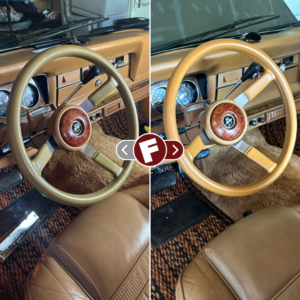
When a franchise owner establishes a relationship with a dealership, they typically set up a recurring schedule. For example, the technician might visit a large Ford dealership every Tuesday and Thursday morning. The used car manager will have a “line” of cars waiting for the technician. The franchisee walks the line, writes up an estimate for the repairs (a steering wheel recolor on one car, a vinyl dashboard repair on another, and a cigarette burn fix on a third), gets the manager’s quick approval, and gets to work.
Because this is a B2B relationship, the dynamics are entirely different from retail consumer work. Dealership managers are not emotionally attached to the vehicles; they are focused on turnaround time and cost-effectiveness. If you are reliable, show up on time, and deliver consistent, high-quality invisible repairs, the manager will give you the keys to every used car that needs work without a second thought. You become an extension of their internal reconditioning team. Building these vendor routes creates a highly predictable, recurring revenue stream. You know exactly where you are going on a Tuesday morning, and you know there will be a steady paycheck waiting for you.
Navigating the Automotive Leather Repair Services Market
The materials used in modern vehicle interiors are incredibly diverse, and mastering their repair requires specialized training. A significant portion of dealership work revolves around automotive leather repair services. However, automotive leather is very different from the leather used in residential furniture.
Car interiors are subjected to extreme conditions. In the summer, a closed car sitting in the sun can reach temperatures exceeding 140 degrees Fahrenheit. In the winter, the materials freeze. Furthermore, driver’s seats face constant, aggressive friction every time someone enters or exits the vehicle. Therefore, automotive leather is almost always heavily pigmented and coated with a durable, UV-resistant clear topcoat.
When a franchise technician repairs a car seat, they are not just making it look good; they are engineering the repair to withstand this brutal environment. The process involves deep cleaning to remove embedded body oils, applying specialized flexible fillers that move with the driver’s weight without cracking, pressing the exact grain pattern of the surrounding hide into the filler, and then airbrushing a custom-matched, factory-grade dye over the area. Finally, a specialized topcoat must be applied to recreate the exact sheen of the original seat whether that is a matte finish of a modern luxury car or the glossy finish of a classic vehicle. Franchises provide the intensive training and proprietary products required to execute these highly technical, durable repairs.
The Financial Perks of a Car Seat Restoration Business
Transitioning from the corporate world to owning a car seat restoration business offers profound financial advantages, largely due to the low overhead and high-margin nature of the work.
First, consider the startup costs. Because you do not need to sign a lease on a commercial building or hire a large staff to manage a storefront, the initial investment in a mobile franchise is drastically lower than a traditional brick-and-mortar business. Your primary expenses are your franchise fee, your training, your initial inventory of products, and your work vehicle.
Second, the profit margins on the repairs themselves are exceptionally high. The actual cost of goods sold (the amount of dye, compound, and cleaner used on a single repair) is often just a few dollars. The value you are charging for is your specialized knowledge, your proprietary techniques, and your labor. When you charge a dealership a hundred and fifty dollars to repair a torn seat bolster, the vast majority of that revenue stays in your pocket.
Furthermore, as a franchise owner, you have the ability to scale. An ambitious owner can start as a single-operator van, building up robust routes with local auto malls. Once the schedule is completely full, the owner can purchase a second territory, hire and train an employee, outfit a second van, and double their revenue output. The B2B nature of dealership routes makes scheduling and managing employees much more straightforward than managing a team doing random, scattered residential calls.
Future-Proofing Your Franchise in the Automotive Industry
A common question among prospective business owners is how future technologies will impact the industry. With the rise of electric vehicles (EVs), autonomous driving, and ridesharing, the automotive landscape is shifting rapidly. However, the demand for interior restoration remains deeply future-proof.
No matter what is powering the engine under the hood whether it is a traditional V8, a hybrid system, or a massive battery pack, the interior of the cabin still relies on seats, steering wheels, center consoles, and door panels. In fact, the shift toward ridesharing and autonomous vehicles may actually increase the demand for mobile reconditioning. Vehicles used for Uber, Lyft, or future autonomous taxi fleets experience drastically higher passenger turnover than personal vehicles. More passengers mean more scuffed door panels, more spilled coffee, and more worn-out rear seats. Fleet managers will need constant, cost-effective maintenance to keep their vehicles presentable and highly rated by users.
Moreover, auto manufacturers are increasingly experimenting with new sustainable interior materials, such as synthetic vegan leathers and recycled plastics. Leading restoration franchises stay ahead of these trends by continuously updating their product lines and training protocols, ensuring their franchisees can repair next-generation materials just as effectively as traditional leather. By partnering with a robust franchise network, you are insulating your business against industry shifts and guaranteeing that you will always have the cutting-edge tools needed to serve your dealership clients.
Owning a mobile auto interior restoration franchise is not just about fixing cars; it is about building a highly efficient, high-margin service business that solves a massive, expensive problem for the automotive retail industry. It is a blue-collar business with white-collar earning potential, built on the solid foundation of B2B relationships.
Own Your Future with a Profitable Mobile Franchise
Ready to take control of your career and tap into the lucrative automotive B2B market? Our proven mobile franchise model empowers you to build a profitable, scalable business without the burden of high overhead or a physical storefront. With strong demand from dealerships, fleet operators, and commercial clients, you’ll be positioned in a high-value niche with consistent revenue opportunities.
We provide the tools, training, and support you need to succeed so you can focus on growing your business and maximizing your earning potential. Take the first step toward true business ownership and financial independence. Contact us today to explore available franchise territories and start your journey.
Frequently Asked Questions (FAQs)
Q: Why don’t car dealerships just replace damaged seats with new ones?
A: Replacing a vehicle’s interior components with brand-new Original Equipment Manufacturer (OEM) parts is incredibly expensive and cuts deeply into the dealership’s profit margin on the sale. Restoration offers a high-quality, permanent fix that makes the car look showroom-ready at a fraction of the cost of replacement.
Q: How long does a typical interior repair take on a dealership lot?
A: The vast majority of interior repairs, such as fixing a worn seat bolster, recoloring a steering wheel, or repairing a cracked plastic door panel, can be completed by a mobile technician in one to two hours. This rapid turnaround allows the dealership to put the car up for sale the very same day.
Q: Do weather conditions affect a mobile auto reconditioning business?
A: While extreme cold or heavy rain can pose challenges for mobile work, most dealerships provide a covered service bay, a wash bay, or an indoor delivery area where franchisees can perform their repairs protected from the elements. Additionally, modern proprietary heat-curing compounds allow technicians to work effectively in a variety of climates.
Q: How does a franchisee secure accounts with local car dealerships?
A: Franchisees secure B2B accounts through targeted, professional route building. This involves visiting used car managers in person, demonstrating the quality of the repair through a free sample or portfolio, and offering a highly reliable, weekly scheduled service that takes the logistical headache out of their reconditioning process.
Q: Are the dyes and materials used safe for high-temperature car interiors?
A: Yes. Automotive-grade restoration products are specifically engineered to withstand the extreme UV exposure and high temperatures found in enclosed vehicle cabins. The specialized topcoats prevent the newly dyed leather or vinyl from fading, cracking, or transferring color onto passengers’ clothing.
Q: Can mobile technicians fix hard plastic dashboard damage?
A: Absolutely. Specialized technicians are trained to repair hard plastics, including dashboards and door trims. Using advanced texture molding and bonding techniques, they can fill cracks or holes left by mounted accessories, recreate the plastic grain, and dye the area to seamlessly blend with the rest of the dashboard.
Q: Do I need previous automotive experience to run this franchise?
A: No prior automotive or upholstery experience is required. Top-tier franchises provide comprehensive, hands-on training academies that teach you the chemistry of the materials, the artistic techniques of color matching and graining, and the specific business strategies needed to successfully manage dealership routes.