
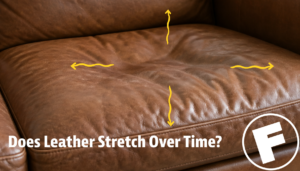
Does Leather Stretch Over Time?
Yes, leather can naturally stretch over time as it responds to regular use, pressure, body heat, and moisture. Because genuine leather is made from natural animal hide with flexible protein fibers, repeated movement and tension can gradually cause the material to loosen, soften, and adapt to its environment.
A small amount of stretching is normal and can enhance comfort by allowing leather items such as shoes, jackets, upholstery, and furniture to develop a more customized feel. For leather furniture, slight changes in the material are expected as cushions, seats, and surfaces adjust to everyday use. Proper leather furniture care helps maintain the material’s flexibility while preventing unnecessary stretching, sagging, and premature wear.
However, excessive stretching can affect the appearance, strength, and longevity of leather. Over time, poorly maintained leather may develop loose areas, wrinkles, creasing, or loss of structure. The amount of stretching depends on several factors, including the type and quality of leather, thickness, tanning process, frequency of use, exposure to heat or moisture, and the level of maintenance provided.
With consistent care and professional maintenance when needed, leather can retain its durability, appearance, and comfort while naturally aging with character.
The Science Behind Why Leather Stretches
To understand why leather behaves the way it does, it helps to look at its biological origin. Leather is fundamentally animal skin, primarily composed of collagen proteins woven together in a complex network. When the hide is tanned, these collagen fibers are stabilized to prevent decay, but they retain their natural flexibility.
When you sit on a leather sofa, slip into footwear, or pull on a leather jacket, your body applies three distinct forces:
- Mechanical Tension: The downward force of body weight or physical pulling forces the woven collagen bundles to flex, align, and elongate in the direction of the stress.
- Thermal Energy: Body heat warms up the natural oils within the hide, relaxing the protein strands and making them far more pliable.
- Moisture Absorption: Environmental humidity or body perspiration penetrates the microscopic pores of the hide, allowing the fiber bundles to lubricate each other and slide further apart.
Over extended periods, these combined forces shift the internal structure of the material. Once the fibers reach a new resting length, they do not automatically snap back to their original state. This permanent elongation is what experts call setting or breaking in.
How Leather Types Influence Stretching and Flexing
Not all hides respond to pressure in the same way. The specific cut and processing method dictate whether an item will yield gracefully or sag prematurely.
Full-Grain Leather
Full-grain hide retains the entire top layer of the hide, including all its dense, natural fiber structures. It is the strongest and most durable grade available. While full-grain hide will stretch slightly to mold around body contours, its tightly packed fibers resist sagging and structural breakdown. Over years of use, it develops a rich patina rather than breaking down.
Top-Grain Leather
Top-grain hide has its uppermost surface lightly sanded to remove natural imperfections before a protective finish coat is applied. This sanding process removes a fraction of the natural fiber density, making top-grain leather slightly softer and more supple from day one. It stretches somewhat faster than full-grain material, making it common for residential seating and apparel.
Split-Grain and Suede
Split-grain material comes from the lower layer of the hide after the top surface has been separated. Lacking the dense outer grain layer, split leather and suede have looser fiber bundles. As a result, items made from split leather stretch quickly under minimal load and can lose their original shape if overloaded.
Bonded and Synthetic Alternatives
Bonded leather consists of shredded hide scraps glued together with polyurethane binders onto a backing fabric. Synthetic alternatives use plastic polymers. Unlike genuine hide, bonded and synthetic materials do not have true protein fiber structures. Synthetic materials may stretch under heat, but they often tear, crack, or peel rather than molding naturally.
Key Factors That Accelerate Leather Wear and Extension
Several daily environmental elements play a direct role in how rapidly your items stretch out, causing noticeable signs of leather wear over time.
- Daily Pressure and Load Distribution: Continuous load in the exact same location forces fiber bundles to remain taut for hours at a time. On a sofa, sitting habitually in one preferred corner cushion creates a localized depression where the hide becomes noticeably looser than the surrounding untouched areas.
- Heat Exposure: Warm temperatures cause the natural oils inside the hide to soften. Radiators, floor heaters, direct afternoon sunlight through windows, and prolonged contact with body heat accelerate the rate at which fibers yield under strain.
- Moisture Balance: Excessive humidity or water exposure relaxes hide fibers significantly. If leather gets damp while under tension, it stretches rapidly. Conversely, if leather dries out completely due to low ambient humidity, the fibers lose their flexibility and begin to snap or crack instead of flexing smoothly.
- Lack of Maintenance: Unconditioned leather loses its internal moisture balance over time. As natural oils evaporate, the fibers become brittle and stiff. When heavy weight is applied to dry leather, the lack of internal lubrication causes individual fibers to fray or stretch unevenly, creating irreversible surface wrinkles and deep creases.
5 Common Leather Items and How They Stretch
Understanding how stretching affects specific everyday items allows you to handle each material properly.
| Leather Item | Primary Stretch Cause | Average Stretch Capacity | Key Maintenance Focus |
| Living Room Sofas | Body weight, prolonged sitting | 3% to 7% across seating zones | Cushion rotation, structural support |
| Work and Riding Boots | Walking friction, foot heat | Up to 1/2 shoe size | Shoe trees, gentle break-in sprays |
| Jackets and Outerwear | Elbow bending, shoulder movement | Moderate flex around joint areas | Broad padded hangers, light conditioning |
| Belts and Straps | Buckle tension, waist pressure | 1 to 2 inches over lifetime | Hole spacing, avoiding over-tightening |
| Car Seats | Slide-in friction, direct sun | Variable depending on seam design | UV protection, routine vacuuming |
1. Leather Furniture (Sofas, Recliners, and Chairs)
Furniture seats endure the highest continuous mechanical stress of any household upholstery. As body weight compresses the foam cushions below, the top hide pulls tight across the frame. Over months of regular use, you may notice mild puddling—a term for subtle waves or slackness appearing on the seat cushion surface. A small amount of puddling is a natural characteristic of genuine hide, but excessive sagging points to poor internal cushion support or neglected maintenance.
2. Leather Footwear and Boots
Anyone who has purchased stiff boots or dress shoes knows the break-in struggle. Footwear hide must stretch slightly around the widest part of your foot, heel cup, and instep to deliver a custom fit. High-quality boots can expand up to half a shoe size across the width through normal walking motion. However, footwear rarely stretches along its length due to reinforced toe boxes and heel counters.
3. Jackets and Apparel
Leather jackets stretch primarily at high-movement stress points: across the shoulders, around the elbows, and across the upper back. A snug jacket usually opens up within a few weeks of consistent wear as body heat and movement mold the armholes and chest section to your specific anatomy.
4. Belts, Straps, and Accessories
Belts experience constant linear tension from the buckle pin pulling against a single hole. Over time, the distance between the buckle and the most frequently used hole will increase as the strap stretches out. Handbags and shoulder straps experience similar length changes when loaded with heavy everyday gear.
5. Automotive Upholstery
Vehicle seats undergo extreme temperature swings, from freezing winter cold to scorching summer heat inside a closed cabin. As passengers slide in and out over high bolsters, side panels flex and stretch continuously. Without UV defense and routine moisture replenishment, automotive hides quickly develop heavy crease lines and loose surface areas.
Step-by-Step Guide: How to Stretch Tight Leather Safely
If you have purchased a pair of stiff boots, a snug jacket, or tight gloves, knowing how to stretch leather safely helps you guide the expansion process without damaging the material integrity.
Method 1: The Isopropyl Alcohol Spray Technique
This method works exceptionally well when stretching leather boots or shoes that pinch near the toe box or instep.
- Step 1: Mix one part 70% isopropyl rubbing alcohol with three parts clean water in a spray bottle.
- Step 2: Lightly mist the solution onto the interior lining of the shoe or the tight exterior area. Do not saturate or soak the material.
- Step 3: Put on a pair of thick wool socks and step into the boots immediately while the material is damp.
- Step 4: Walk around your home for 30 to 45 minutes as the alcohol evaporates. The damp fibers will yield to the extra bulk of the thick socks.
- Step 5: Once dry, remove the boots and apply a light layer of leather conditioner to restore healthy oil levels.
Method 2: Mechanical Stretching Tools
For footwear or glove adjustments, specialized mechanical tools apply controlled, uniform pressure without risking uneven tears.
- Footwear Stretchers: Insert a wooden or metal shoe stretcher into the footwear. Turn the adjustment crank until the wood expands firmly against the tight zone. Leave the device in place for 24 to 48 hours.
- Targeted Spot Buttons: Use plastic plug inserts attached to the stretcher tool to target specific pressure areas, such as bunions or wide toe joints.
Method 3: Gentle Motion and Warmth
For leather jackets or gloves, natural wear remains the safest option.
- Step 1: Wear the tight garment indoors while performing light arm movements, such as flexing your elbows or reaching forward.
- Step 2: Allow your natural body heat to warm the hide gradually.
- Step 3: Repeat this daily for short 20-minute sessions rather than forcing a single long wear session.
Avoid popular internet hacks involving boiling water, heavy hair dryer heat, or freezing water bags inside your items. Extreme heat strips essential tanning oils, causing irreversible stiffness and cracking, while freezing water can rupture surface fibers unpredictably.
How to Prevent Excessive Sagging and Over-Stretching
While some natural movement adds character and comfort to hide products, preventing excess looseness keeps your furniture and gear looking new for decades.
1. Implement a Cushion Rotation Strategy
For living room furniture, uneven stretch is the primary cause of unsightly puddling. Make a habit of rotating removable seat and back cushions every few weeks. If your sofa has fixed seat cushions, alternate where family members sit daily so that weight is shared across all seating sections.
2. Redensify Internal Support Foam
Often, what looks like stretched hide on a couch is actually collapsed foam padding underneath. When internal foam breaks down, the surface hide loses its internal tension and sags outward. Replacing or bolstering aged seat foam restores underlying firmness, instantly taking up the loose slack.
3. Control Indoor Environmental Factors
Position furniture at least two to three feet away from intense heat sources such as fireplaces, wood stoves, and heating vents. Use sheer window blinds or window films in bright rooms to prevent solar rays from frying the surface finish and weakening the hide.
4. Practice Regular Leather Furniture Care
Proper leather furniture care is essential for maintaining hide elasticity over the long haul. Regular cleaning removes microscopic dust particles, body sweat, and grit that act like sandpaper inside the hide pores. Follow up cleaning with a specialized protector to create a breathable barrier against oils, liquid spills, and color transfer.
Can You Shrink Stretched Leather Back to Shape?
A common question among homeowners and shoe enthusiasts is whether loose hide can be shrunk back down. The short answer is: only slightly, and with extreme caution.
Because stretched collagen fibers have elongated permanently, attempts to shrink them rely on contracting the protein structure using moisture and heat.
The Damp Heat Myth
A common online suggestion involves spraying leather with water and drying it with a hot blow dryer or letting it sit in the hot sun. While this process does cause fibers to tighten and pull together, it works by aggressively removing moisture and natural oils.
The result is almost always a brittle, dry finish that is prone to cracking. Any shrinkage achieved through forced heat is usually temporary, as the fibers quickly stretch out again once weight is reapplied.
The Safe Alternative: Structural Adjustments
Instead of trying to shrink the hide itself:
- For Footwear: Insert a thin leather inner sole or heel grip to fill excess space inside loose shoes.
- For Furniture: Work with professional upholstery restoration experts to re-tension the internal spring base, add high-density foam toppers, or re-pull the hide tightly over the frame rail.
Preserving Your Leather Investment
Leather is a premium natural product designed to last for generations when handled correctly. Trying to fix heavy structural sagging or extreme dryness with improper home remedies often leads to permanent surface discoloration, finish peeling, or fiber tears.
When dealing with valuable home furniture, classic auto interiors, or high-end apparel, routine maintenance should be handled with care. Regularly conditioning leather helps replenish loss of natural moisture, preserves elasticity, and prevents premature surface cracking. Professional cleaning removes deeply embedded oils, dirt, and allergens that weaken the surface structure over time.
If your furniture exhibits deep wrinkles, seam stress, or severe cushion puddling, a specialized leather repair and restoration service can recondition the hide, restore rich color tones, and rebuild internal cushion support without replacing the entire piece.
Ready to revitalize your home or commercial leather furniture? Don’t let natural wear, dryness, or sagging ruin your favorite seating. The mobile repair and restoration specialists at Fibrenew come directly to your home or business to restore, clean, and protect your leather investments. Whether you need deep surface cleaning, conditioning treatments, or structural cushion rejuvenation, contact your local Fibrenew franchise today to request a free service estimate.
Frequently Asked Questions
Q: Does full grain leather stretch more than top grain leather?
A: No, full-grain leather stretches less than top-grain leather because it retains the entire dense, natural outer fiber structure of the hide. Top-grain leather has its top layer lightly sanded down during manufacturing, which slightly reduces its natural fiber density and makes it expand somewhat faster under weight and pressure.
Q: How long does it take for new leather boots to stretch out?
A: Most high-quality leather boots require roughly 80 to 100 hours of active wear to break in completely and mold to your foot shape. You can speed up this break-in process by wearing thick socks, applying a gentle leather stretching spray, or using a mechanical wooden shoe stretcher overnight.
Q: Is puddling on a leather sofa a sign of poor quality?
A: Mild puddling or subtle surface wrinkling is a normal characteristic of genuine, high-grade leather as it flexes under body weight. However, severe sagging accompanied by deep folds usually indicates that the underlying cushion foam has lost its density or that the furniture lacks proper maintenance and conditioning.
Q: Will water stretch out leather items permanently?
A: Water softens and relaxes hide fibers, making the material significantly easier to stretch while wet. However, if leather is soaked and left to dry without conditioning or proper shaping, it will lose its natural oils, becoming stiff, brittle, and susceptible to cracking under minimal strain.