
How Restoration Reduces Aviation Maintenance Costs
In aviation, “good enough” isn’t good enough; everything must look and feel pristine. Whether it’s a private jet, charter fleet, or commercial aircraft, the condition of the cabin interior directly reflects safety standards, passenger experience, and brand reputation.
But maintaining that level of excellence is becoming more expensive every year.
As of 2026, the global aircraft refurbishing market is steadily expanding, driven by a growing need to extend the life of existing fleets. With delays in new aircraft deliveries such as ongoing backlogs for programs like the Boeing 777X; many operators are keeping aircraft in service longer than planned. This shift is increasing demand for smarter, more cost-efficient solutions, including aviation interior repair and restoration service providers that specialize in extending cabin life.
At the same time, rising material costs and supply chain disruptions are putting pressure on aviation maintenance costs, making full interior replacements less practical for many operators.
This is where a more strategic approach comes in.
Instead of replacing entire cabin components, many aviation professionals are turning to seat refurbishment and targeted aviation interior restoration. By focusing on high-impact areas like seating, leather surfaces, and frequently used touchpoints; operators can dramatically improve cabin appearance without the expense of a full overhaul.
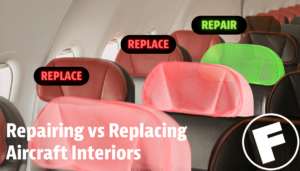
The result is significant aircraft interior cost savings, reduced downtime, and a cabin that still delivers a premium, “like-new” experience.
In today’s aviation landscape, restoration isn’t just a maintenance option; it’s a smarter investment strategy.
The Economics of Aircraft Interiors in 2026
The aviation industry currently faces a unique challenge: aircraft are flying more hours, but new part deliveries are slower than ever. A single premium business-class suite in 2026 can cost between $150,000 and $300,000. Even a “standard” economy seat replacement can set an operator back significantly once freight, labor, and certification are factored in.
Aircraft interior cost savings are no longer just a “nice-to-have” budget item; they are a survival strategy. Restoration allows you to bypass the massive capital expenditure of procurement and focus on revitalizing the high-quality frames and structures you already own.
Repair vs. Replace: The Financial Breakdown
| Expense Category | Full Seat Replacement | Professional Restoration |
| Material Cost | $10,000 – $150,000+ per unit | $500 – $2,500 per unit |
| Average Lead Time | 16 – 32 Weeks | 2 – 5 Days |
| Labor Intensity | High (Multi-person crew) | Moderate (On-wing) |
| Downtime Cost | Significant (Weeks of AOG) | Minimal (Overnight/Layover) |
When evaluating aviation maintenance costs, it is essential to look at the “Total Cost of Ownership.” Replacing an interior involves more than just the sticker price; it includes disposal fees for old units, labor for a full tear-out, and the risk of shipping damage.
By choosing restoration, operators typically see a 70% to 85% reduction in direct material spending.
Regulatory Compliance & Flame Retardancy (FAA/EASA)
In aviation, a repair is only as good as its paperwork. Every material used in a cabin must comply with strict 14 CFR Appendix A to Part 43 or EASA equivalent standards for fire resistance.
Professional aviation restoration technicians use FAA-approved, water-based finishes that are specifically designed to maintain the leather’s self-extinguishing properties. These “burn-certified” repair systems ensure that:
- The leather remains flexible and breathable.
- The repair does not alter the “burn-test” status of the seat.
- The aircraft remains fully airworthy and compliant with safety inspections.
The AOG Factor: Reducing Grounded Time
The most expensive aircraft is the one that isn’t flying. “Aircraft on Ground” (AOG) time is a silent revenue killer. Recent data shows that the mean downtime per AOG incident has been reduced to roughly 2.9 hours in 2024–2025 due to better predictive maintenance but interior replacements remain the outlier, often grounding planes for weeks.
Mobile seat refurbishment services provide the ultimate solution. Technicians can perform “on-wing” repairs during scheduled C-checks or even during overnight layovers. Because the seats never leave the aircraft, you eliminate the risk of transit damage and keep your flight schedule intact.
Weight Savings & Fuel Efficiency: The Hidden ROI
An often-overlooked benefit of restoration is weight management. Over years of service, aircraft seats accumulate dirt, debris, and non-compliant “quick-fix” coatings that can add significant weight to a cabin.
Did you know? A thorough deep-cleaning and professional restoration can remove up to 0.6 kg of accumulated grime per seat. Across a wide-body aircraft with 300 seats, this equates to a weight reduction of 180 kg.
In the current fuel market, saving just 1 kg of weight can save hundreds of liters of fuel annually per aircraft. Restoration doesn’t just look good; it makes the aircraft lighter and more fuel-efficient.
Sustainability: The ESG Advantage of Restoration
Environmental, Social, and Governance (ESG) goals are now at the forefront of the aviation sector. Manufacturing new aerospace leather is resource-intensive. Furthermore, materials like Carbon Fibre-Reinforced Plastic (CFRP), often used in new seat shells, account for over 45% of total CO2 emissions in interior production.
Choosing restoration is a powerful demonstration of a “Circular Economy” approach. By utilizing leather cleaning and protecting programs, you:
- Extend the lifecycle of high-quality hides.
- Avoid the 5,760 kg CO2 equivalent typically released during the production of new polyurethane foams.
- Prevent bulky, non-biodegradable materials from entering landfills.
Keep Your Fleet in the Air
Don’t let worn-out leather ground your aircraft or dent your budget. Restore your cabin to its original glory for a fraction of the cost of replacement. Would you like me to find a certified aviation restoration specialist who can provide a mobile, on-wing quote for your next maintenance window?
Frequently Asked Questions (FAQs)
Q: Is it legal to repair aircraft leather under FAA regulations?
A: Yes. Under 14 CFR Part 43, repairing upholstery is considered “preventive maintenance” or “minor repair.” As long as the materials meet burn-test requirements and the repair doesn’t interfere with operating systems, it is fully compliant.
Q: Can you match the specific custom colors of a private jet interior?
A: Absolutely. Technicians use digital color-matching to custom-mix dyes on-site, ensuring a repaired seat or side panel perfectly matches the rest of the cabin’s unique palette.
Q: How does restoration impact fuel costs?
A: By stripping away old, heavy coatings and accumulated debris, restoration returns seats to their original TSO (Technical Standard Order) weight. Every kilogram saved translates into roughly $4,000+ in annual fuel savings per aircraft for long-haul carriers.
Q: What is the most common cause of leather failure in cabins?
A: Low humidity at high altitudes (often below 10%) causes leather to lose its natural moisture, leading to “desiccation” or cracking. Regular professional conditioning is the best way to lower long-term aviation maintenance costs.