How to Tell If Your Sofa Springs Need Repair or Replacement
Every piece of beloved furniture eventually reaches a crossroads where comfort competes with aging internal components. You settle into your favorite spot at the end of a long day, only to realize the familiar, supportive feel has disappeared. Instead of resting comfortably on the cushions, you may feel yourself sinking into a hollow dip or even notice the uncomfortable pinch of a loose spring or wire pressing through the base.
When a couch loses its structural integrity, the immediate reaction is often frustration followed by the assumption that replacement is the only option. Many homeowners begin browsing expensive alternatives, believing the furniture has reached the end of its life. However, the real issue is rarely the leather, fabric, or foam. In most cases, the problem lies deeper within the foundation of the sofa support system, where worn or broken components require targeted sofa spring repair.
Understanding how to diagnose these structural issues turns uncertainty into informed decision-making. Taking time to assess what is happening beneath the upholstery can save significant money, extend the life of a quality frame, and prevent a well-built piece of furniture from being discarded unnecessarily. With timely sofa spring repair, many sagging couches can be restored to their original comfort and support.
The Anatomy of Modern Couch Foundations
Before jumping to conclusions about whether your furniture is salvageable, it helps to understand the invisible engineering holding you up. Sofas rely on distinct types of support mechanics, and knowing which one lives inside your furniture determines the complexity of any potential remedy.
Eight-Way Hand-Tied Springs
Widely considered the gold standard of traditional furniture craftsmanship, this system uses individual, hourglass-shaped coil springs. A technician anchors these coils to the bottom webbing of the frame and meticulously ties them to one another, as well as to the frame walls, using heavy-duty twine in eight different directions. This intricate webbing creates an interconnected matrix. When you sit down, the weight is distributed across the entire platform rather than forcing a single spring to bear the load alone. This system offers incredible longevity but requires significant expertise to rebuild when the twine eventually breaks or unties.
Sinuous or Zigzag Springs
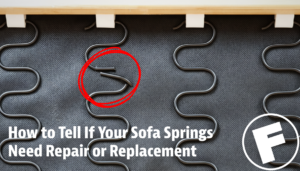
The most common foundation found in modern residential furniture consists of sinuous springs, often referred to as zigzag wires. These are continuous, S-shaped steel wires that run horizontally across the seat frame interval. They are held in place by metal clips attached directly to the wooden rails and are often linked together by horizontal tie wires to keep them from twisting. Sinuous systems offer a firmer feel and allow for sleeker, lower-profile furniture designs. Over time, these wires can snap due to metal fatigue, or the retaining clips can pull away from the wood frame entirely.
Pocket Coils
Borrowing technology from high-end mattress manufacturing, some contemporary manufacturers utilize wrapped pocket coils within the seating platform or directly inside the core foam of the cushions. These are small, individual vertical coils encased in fabric sleeves. They provide exceptional localized contouring and isolated motion transfer, but if the fabric pockets tear or the internal structure shifts, the seat can rapidly develop localized lumps and deep hollows that are difficult to patch without professional intervention.
Webbing Support
Some modern styles skip metal altogether, utilizing heavy-duty elastic or polypropylene webbing woven in a basketweave grid across the seat opening. While high-grade, resilient webbing performs admirably for years, lower-tier webbed platforms are prone to stretching out and permanently losing their elasticity under heavy, repetitive use, resulting in an unmistakable, uniform hammock effect.
Early Warning Signs of Internal Damage
Structural failure rarely happens overnight. It is typically a gradual process characterized by subtle changes in how the furniture responds to your body weight. Paying attention to these early warning indicators allows you to intervene before a simple adjustment escalates into a catastrophic frame failure.
Sinking into a Hollow Profile
The clearest sign of trouble is the physical profile of the seating area when unoccupied. If you remove the cushions and notice a visible valley where the foundation dips lower than the surrounding frame, you are dealing with a sagging sofa. The support underpinnings have surrendered their tension. When you sit down, a healthy couch should compress slightly and then provide a firm, upward resistance. If you feel like you are sinking continuously until your thighs tilt upward and your lower back strains to maintain balance, the underlying mechanics are no longer doing their job.
Auditory Clues: Squeaks, Groans, and Pops
Your furniture should be quiet. If every shift in weight triggers a chorus of high-pitched squeaks, metallic groans, or loud popping noises, the metal components are experiencing abnormal friction. Squeaking typically occurs when the protective coatings on sinuous wires wear down, causing raw metal to rub against metal clips or adjacent wires. A sudden, sharp pop often signals that a retaining clip has sheared off or a wire has snapped entirely under tension.
Uneven Cushion Alignment and Gaps
When the underlying platform fails in one specific zone, it alters the alignment of everything resting on top of it. You might notice that your seat cushions no longer sit flush with each other, or that one corner tilts awkwardly toward the armrest. Gaps may form between the cushions, or the front edge of the seat might bow outward. Flipping or rotating the cushions provides no relief because the problem is not a deformed foam core, but an unstable foundation beneath it.
Physical Protrusions Under the Dust Cover
Take a look at the bottom of your furniture. The thin fabric barrier on the underside, known as the dust cover or cambric, should be relatively flat and intact. If you notice strange bulges stretching the fabric downward, or if a sharp piece of metal has pierced through the material, you likely have loose springs migrating inside the base. A spring has broken loose from its anchor point and is moving downward. Left unchecked, these loose metal edges can easily scratch hardwood flooring, tear carpets, or cause painful pinches to anyone moving or cleaning beneath the seating deck.
The Diagnostics: Assessing the True Damage
To make an accurate decision between a localized repair and a full replacement, you need to conduct a physical inspection. This process requires stripping away the removable elements of the furniture to look directly at the framework.
Recommended Diagnostic Evaluation
- Clear the Seating Deck: Strip away all removable back and seat cushions to expose the underlying fabric lining. Look across the horizontal plane for any immediate, visible unevenness.
- Perform a Physical Pressure Test: Use your hands to apply firm, isolated downward pressure across each seat quadrant. Take note of any areas that collapse to the floor without resisting your weight.
- Log Structural Sounds: Shift weight purposefully over different sections of the frame. Note the locations of any metallic friction, clicks, or wooden creaks.
- Examine the Foundation Base: Safely tilt the furniture onto its back panel. Look closely at the dust cover mesh for external bulges, missing anchoring staples, or protruding metal wire heads.
- Inspect the Frame Joins: If the dust cover is damaged or loose, look inside the cavity to verify if the metal mounting clips are pulled clean out of the wood rails or if the wooden framework itself shows signs of localized splitting.
Start by stripping all loose cushions from the deck. Press your hands firmly into each individual quadrant of the seating platform. A functional area will offer uniform, elastic resistance across the entire surface. If your hand easily pushes down to the floor in one specific spot while neighboring zones remain firm, you have localized component failure that requires a targeted couch spring repair.
Next, carefully tilt the entire sofa onto its back to expose the underside. If the dust cover is intact but sagging heavily, use your fingers to gently feel through the fabric. You can easily trace the outline of the wires to determine if they are still straight and taut, or if they are twisted, detached, and floating loosely inside the cavity. If the damage is obvious, you may need to carefully remove the staples holding the dust cover in place to get an unobstructed view of the wooden rails, the anchoring clips, and the condition of the wire fasteners.
Financial and Practical Analysis
Determining whether to pursue a targeted fix or invest in a brand-new sofa comes down to analyzing the structural health, age, sentiment, and cost of your furniture piece. Let us look at how different factors stack up against each other to help guide your decision.
Evaluating Frame Quality: Kiln-Dried Hardwood vs. Engineered Composites
The absolute deciding factor in whether a sofa is worth repairing is the construction quality of its core wooden frame. High-end, premium furniture features frames crafted from thick, kiln-dried hardwood (such as oak, maple, or ash) joined with double-dowel wood joints, corner blocks, and heavy screws. These frames are incredibly heavy, rigid, and built to endure for generations. If the frame is solid wood, it can easily handle being stripped down and refitted with a fresh sofa spring repair multiple times over its lifecycle.
Conversely, budget-friendly modern furniture often uses thin engineered plywood, oriented strand board (OSB), or particleboard held together with staples and glue. When a spring anchor pulls away from these weaker materials, it frequently splits or shreds the wood composite beyond repair. If the wooden rail itself has fractured into splinters, securing a new spring system becomes nearly impossible without replacing the entire wood section, making a repair economically impractical.
Evaluating Repair vs. Replacement Value
When reviewing the financial numbers, professional restoration guidelines often point to the 50% Rule of Furniture Investment. If the direct quote for a professional structural repair is less than half the cost of acquiring a newly manufactured equivalent of similar quality, repair is the optimal financial choice.
This mathematical advantage increases dramatically when handling older, heirloom-quality pieces. A premium couch built fifteen years ago often features superior kiln-dried frame timber that outclasses modern low-cost alternatives. In these circumstances, spending a predictable amount on a targeted base restoration preserves a superior foundational chassis that would cost thousands to replicate in today’s retail market.
Environmental Impact and Sustainability
Beyond pure financial calculations, the environmental footprint of furniture disposal is a growing concern for modern homeowners. Big-box, low-quality furniture has contributed significantly to a growing waste crisis, with millions of tons of discarded sofas entering municipal landfills every year.
Most upholstered furniture contains complex blends of treated woods, petroleum-based polyurethane foams, synthetic fabrics, and heavy steel elements that do not degrade easily over time. Opting to participate in sustainable furniture restoration directly prevents bulk waste from entering the ecosystem, extends the carbon storage value of the wooden frame components, and reduces the manufacturing demand for new raw materials.
When a Professional Restoration Strategy is Essential
While many minor home maintenance tasks can be tackled on a Saturday afternoon, complex structural furniture restoration sits in a unique category. There are several clear scenarios where stepping back and contacting a professional technician is the safest and most efficient path forward.
Working with Fine Materials like High-Grade Leather
If your sofa is wrapped in premium top-grain leather, aniline leather, or delicate luxury fabrics, the risks of a DIY mistake skyrocket. Accessing internal components requires careful deconstruction of certain upholstered sections, stapled panels, or hidden seams.
Professional restoration technicians possess the specialized tools, tensioning clamps, and handling expertise required to access the inner frame without puncturing, staining, or misaligning the outer material skin. They ensure that once the interior components are renewed, the leather is re-stretched smoothly across the frame, preserving its luxurious appearance and flawless grain alignment.
Managing Complex Structural Rebuilds
Tensioning a raw steel coil matrix or stretching new high-tensile sinuous clips requires an immense amount of physical force and specialized mechanical pullers. If a steel wire slips out of an improvised home clamp under tension, it can violently snap backward, causing severe lacerations to your hands or face, and tearing through surrounding fabric effortlessly. Furthermore, if the frame requires structural reinforcement, sistering broken wooden rails, or custom fabrication of corner blocks, a professional ensures the final product meets strict safety and load-bearing requirements.
Reclaiming the Comfort of Home
Your sofa is more than just furniture. It is the heart of your living space. It is where families gather, guests are welcomed, and quiet moments of rest happen every day. When the support system begins to fail, that comfort is compromised along with posture, aesthetics, and the overall feel of your home.
Understanding what is happening beneath the surface is the first step. In many cases, issues like worn or loose springs, weakened webbing, or minor frame fatigue can be repaired. In more severe situations, deeper structural damage may require professional restoration or replacement. Identifying the difference helps protect your investment and extend the life of your furniture.
Whether you choose a careful DIY fix or rely on expert intervention, addressing sofa support issues early prevents further damage and restores long-term stability.
If your sofa is showing signs of sagging, discomfort, or uneven support, do not wait for the problem to worsen. Contact the professionals at Fibrenew today for mobile, on-site restoration services. Their trained technicians specialize in repairing leather, vinyl, plastics, and internal sofa support systems, right in your home, without the hassle of transport.
Frequently Asked Questions
Q: How long should a typical sofa support system last before showing wear?
A: In high-quality furniture featuring kiln-dried hardwood frames and eight-way hand-tied steel coils, the foundation can easily perform optimally for fifteen to twenty-five years with proper care. For standard mid-tier residential sofas utilizing sinuous zigzag wire configurations, initial signs of tension loss or clip wear often emerge within seven to ten years of regular family use.
Q: Can I simply put a wooden board under my couch cushions to fix a sag?
A: Placing a piece of plywood or a commercial sagging cushion support insert directly under the seat cushions is a temporary cosmetic fix, not a structural repair. While it prevents the foam cushion from dipping deeply into the immediate gap, it transfers your weight uniformly down onto the already damaged frame below. This extra pressure accelerates frame warping and splits the wooden rails while creating a rigid, unnatural sitting surface that lacks ergonomic comfort.
Q: Why does my couch squeak every time someone sits down on it?
A: Loud squeaking is typically caused by metal friction within the sinuous spring system. Over years of use, the insulated paper coating or plastic lining inside the metal anchoring clips wears away, allowing the bare steel wire to rub directly against the metal clip or the mounting staples. It can also happen when the horizontal tie wires that connect adjacent springs rub against one another due to loose tensioning clips.
Q: Is it possible to replace just one broken zigzag spring or must I replace them all?
A: If the surrounding wires are still stiff, perfectly straight, and holding their original factory arc, it is entirely acceptable to perform a localized repair by replacing just the single broken wire and its corresponding frame clips. However, if the entire deck has a uniform sag, it indicates the metal is experiencing widespread material fatigue, and replacing all the wires simultaneously ensures balanced support across the entire couch.
Q: How can I tell if my sofa frame is broken versus just a broken spring?
A: A broken spring typically results in a localized soft spot or a sharp clanking sound directly underneath a specific seat. A broken or split wood frame rail usually manifests as a drastic, corner-to-corner tilt of the entire sofa, a visible bowing of the outer wooden baseboards, or a deep structural creak when moving the furniture across the room. If the frame is broken, the entire alignment of the legs and armrests may appear visibly warped.
Q: What causes sofa springs to snap or pull away from the frame?
A: The primary cause is sudden, extreme weight impacts, such as children jumping on the seating surface or dropping heavy objects onto the deck. This forces the metal loops past their elastic limit and shears the anchoring staples out of the wood. Over decades, normal metal fatigue from daily sitting can also cause the steel to become brittle and snap along the primary tension bends.