
Why Replacing Medical Furniture Isn’t Always Necessary
In a healthcare facility, every piece of equipment plays a vital role in patient care and safety. From advanced diagnostic tools to examination tables and waiting room chairs, functionality and hygiene are non-negotiable. Yet medical furniture faces some of the toughest conditions in any industry. Constant exposure to industrial-grade disinfectants, high patient turnover, and 24/7 operations cause vinyl and leather surfaces to degrade quickly.
Traditionally, a cracked exam table or torn lobby chair meant full replacement. But with budgets tightening and supply chains less predictable, many healthcare administrators are asking a smarter question: Is buying new always necessary?
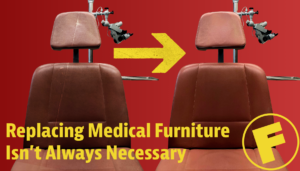
The answer increasingly points to professional medical vinyl restoration and repair service. Compared to total replacement, restoration not only saves costs but also restores surfaces to a clean, non-porous, fully functional condition making it the most effective solution for healthcare facilities looking to maximize value without compromising safety.
The Compliance Crisis: Why “Minor” Damage is a Major Risk
In a retail or office setting, a small tear in a chair is an aesthetic nuisance. In a medical setting, it is a liability. Healthcare facilities are governed by strict infection control protocols. Surfaces must be non-porous to allow for proper sterilization between patients.
Once a vinyl exam table or a dental chair develops even a hairline crack, it becomes a sanctuary for pathogens. Bacteria and bodily fluids can seep into the underlying foam, where topical disinfectants cannot reach. This compromises the sterile field and can lead to failed inspections or, worse, healthcare-associated infections (HAIs). Because the stakes are so high, many facilities rush to replace the entire unit at the first sign of wear.
The Myth of “Total Replacement” in Healthcare
Many healthcare administrators feel the instinct to replace equipment at the first sign of wear, often believing that a repaired surface can never be as “clean” or “safe” as a brand-new one. This mindset has fueled a culture of unnecessary replacements, even when the underlying structure of the furniture remains fully functional.
In reality, modern medical vinyl restoration and medical upholstery repair techniques have advanced significantly. These services use specialized, antimicrobial-compatible materials that bond at the molecular level with the original vinyl or leather. The result is a seamless, non-porous surface that meets strict infection control standards and can be sanitized just like new furniture.
With professional restoration and repair, healthcare facilities can maintain both safety and hygiene without the expense and disruption of full replacement, debunking the myth that “new is always better.”
Why Restoration Often Outperforms Replacement:
- Structural Integrity: Most medical furniture especially hydraulic exam tables and specialized dental chairs is built on incredibly expensive, heavy-duty mechanical frames. These frames are often perfectly functional for 20+ years, yet they are frequently discarded simply because the top 1/8th inch of vinyl has cracked.
- A Perfect Seal: Professional restoration doesn’t just “cover” a hole. It fills and seals the breach with medical-grade compounds that restore the non-porous barrier, ensuring the piece can be safely sanitized once again.
- Customization: Finding an exact replacement for an older model table can be difficult. Restoration allows you to maintain the exact ergonomic setup your staff is accustomed to without the learning curve of new equipment.
Breaking Down the ROI: Cost-Saving Healthcare Solutions
The financial gap between repairing and replacing medical furniture is staggering. A high-end examination table can cost anywhere from $3,000 to $8,000. Replacing an entire suite of waiting room seating can easily climb into the tens of thousands.
By opting for professional restoration, facilities typically spend only 15% to 25% of what they would on new purchases.
| Feature | Total Replacement | Professional Restoration |
| Unit Cost | $3,000 – $10,000+ | $250 – $750 |
| Lead Time | 4 – 12 Weeks | 1 – 2 Days |
| Disposal Fees | High (Medical Waste) | Zero |
| Installation | Required | Not Required |
For a hospital system or a multi-location clinic, these savings represent hundreds of thousands of dollars that can be reallocated toward patient care, life-saving technology, or staff retention.
Seamless Integration: Restoring Without Disrupting Patient Care
Perhaps the greatest advantage of restoration in a healthcare context is the preservation of the “patient flow.” Replacing a heavy exam table involves coordinating delivery, unboxing, assembly, and the heavy lifting of moving the old unit out. This often requires closing an exam room for an entire day or more.
In contrast, specialized technicians can perform on-site repairs during low-traffic hours. Because the materials used in modern leather cleaning and protecting and repair are low-VOC and fast-curing, the room can often be back in service for the very next patient.
Sustainability: The “Green” Hospital Initiative
Healthcare facilities are among the largest producers of waste in the world. As more hospital boards implement sustainability targets, the “throwaway” culture of furniture management is coming under scrutiny.
Choosing restoration over replacement keeps bulky, non-biodegradable vinyl and foam out of landfills. It also reduces the carbon footprint associated with the manufacturing and global shipping of new medical equipment. Restoration is a visible, measurable way for a facility to demonstrate its commitment to environmental stewardship.
A Healthier Bottom Line
The decision between medical furniture restoration vs replacement shouldn’t be based on habit, but on data. Restoration offers a faster, more affordable, and equally safe alternative to the “buy new” cycle. It protects your clinical environment, ensures compliance with health codes, and preserves your capital for what matters most: the patients.
Next time you see a crack in an exam table or a tear in a lobby chair, don’t look for a catalog. Look for a restoration expert.
Optimize Your Facility’s Budget
Is your medical furniture showing signs of wear? Don’t let minor damage turn into a costly compliance risk or disrupt patient care. With professional restoration, you can extend the life of your equipment, maintain hygiene standards, and significantly reduce expenses.
Take the smart, cost-effective approach. Schedule your consultation today with our repair and restoration experts and discover how much your clinic can save this quarter.
Frequently Asked Questions
Q: Is restored medical furniture as hygienic as new furniture?
A: Yes. Professional medical furniture restoration uses specialized, non-porous compounds that create a seamless, liquid-proof seal. This allows the furniture to be sanitized with standard hospital-grade disinfectants, just like a brand-new piece.
Q: Which healthcare items are the best candidates for restoration?
A: The best candidates are items with high replacement costs but durable frames, such as examination tables, dental chairs, physical therapy benches, phlebotomy chairs, and high-traffic waiting room sofas.
Q: How does restoration help with healthcare facility inspections?
A: Inspectors look for tears or cracks where bacteria can hide. By proactively repairing these areas, you ensure your facility meets the “cleanable surface” requirements of the Joint Commission and local health departments, avoiding costly citations.
Q: Can restoration match the specific “Medical Blue” or “Seafoam Green” of my current equipment?
A: Absolutely. Restoration technicians use color-matching technology to custom-blend dyes on-site, ensuring that the repaired area is visually indistinguishable from the rest of the unit.