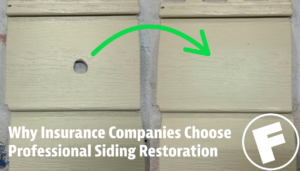
Why Insurance Companies Choose Professional Siding Restoration Services
Property adjusters, insurance carriers, and risk managers deal with a massive logistical headache when a severe storm hits a neighborhood. When golf-ball-sized hail, localized windstorms, or flying construction debris puncture, crack, or warp a home’s exterior, the financial exposure climbs rapidly. For a long time, the standard response to significant exterior damage restoration was a total overhaul: tear down all the existing siding and replace it from scratch.
However, full property replacement creates friction. It spikes the total cost of the claim, prolongs the timeline for the property owner, and often leads to bitter disputes over mismatched vinyl lots.
This is exactly why insurance companies increasingly choose professional siding restoration services. By moving away from unnecessary full-scale demolition and focusing on precision, localized fixes, insurance providers can dramatically lower claims expenses. At the same time, they protect the structural integrity and visual appeal of the insured asset.
The True Cost of Exterior Property Damage
When assessing a home after extreme weather, the initial glance often reveals scattered impact marks, small punctures from debris, or hairline cracks across multiple panels. From a strict structural standpoint, the vast majority of the siding remains entirely intact and functional. Yet, conventional contractors frequently push for total replacement, arguing that perfect consistency cannot be achieved otherwise.
For an insurance carrier, approving a complete replacement for localized damage creates substantial financial leakage. A full replacement involves extensive labor costs, structural disposal fees, and long material lead times. When thousands of homes are affected across a single region after a major storm, these inflated claims can strain a carrier’s localized reserves.
Turning to specialized exterior damage restoration changes the math completely. Instead of treating a few holes or cracks as a total structural loss, specialized restoration focuses entirely on the affected areas. This modern approach bridges the gap between high-quality structural repair and smart fiscal management, which fundamentally shifts how adjusters calculate risk and settle claims.
How Specialized Restoration Solves the Matching Problem
One of the most persistent operational hurdles in any insurance claim siding repair is the dreaded matching issue. Vinyl and composite materials face constant exposure to ultraviolet rays, fluctuating temperatures, and local environmental conditions. Over five to ten years, a home’s exterior undergoes natural weathering and fading.
First, the original vibrant panel color fades over time due to years of UV exposure, resulting in a muted, faded current color. Next, when you introduce a brand-new factory replacement piece, the matching challenge becomes obvious because the new piece is highly saturated compared to the weathered wall.
If an adjuster attempts to replace just a few damaged panels with brand-new pieces straight from the factory, the color difference is immediately obvious. The new panels look vibrant and highly saturated, while the surrounding original pieces appear muted and weathered.
To resolve this, many insurance policies include specific matching clauses or endorsements. These state that if a reasonable visual match cannot be found, the insurer may be on the hook to replace the entire side of the house, or even the whole building. This turns a minor patch job into a multi-thousand-dollar structural replacement.
Professional siding restoration services completely bypass this dilemma through advanced, on-site color matching and material integration technology. Rather than trying to source a discontinued product or relying on mismatched factory runs, expert technicians repair the physical damage directly on the existing panel. They then use specialized color systems to blend the fixed area seamlessly into the weathered shade of the surrounding wall. This achieves cost-effective siding matching and preserves the uniform appearance of the home without forcing the insurance company to pay for non-damaged sections.
The Strategic Value of On-Site Repairs
Efficiency is everything during peak storm seasons. When a major weather event strikes, claim volumes surge, stretching adjusters thin and putting customer service metrics to the test. Traditional construction timelines often require weeks just for material delivery, site setup, dumpster placement, and full crew scheduling.
In contrast, partnering with a professional restoration specialist who utilizes mobile-focused siding restoration streamlines the entire process. Technicians arrive on-site with self-contained mobile workshops equipped with the specialized tools, compounds, and color pigments needed to complete the job in a fraction of the time.
Key Operational Advantages
- Zero Demolition Footprints: Eliminates the need for heavy dumpsters sitting on lawns, removes the risk of landscaping damage, and avoids extensive tear-out labor.
- Rapid Claim Turnarounds: Most localized exterior damage can be completely restored within hours, rather than stretching across multiple days or weeks.
- Minimized Policyholder Disruption: Homeowners avoid the prolonged noise, mess, and foot traffic of a full construction crew working on their property.
The Bottom Line: For the insurance carrier, this accelerated lifecycle translates directly into lower administrative expenses and faster claim closures. The shorter a claim remains open, the less it costs to manage, and the lower the risk of unexpected cost inflation.
Sustainable Repair Practices and Risk Mitigation
Modern insurance operations place a heavy emphasis on sustainability and corporate environmental responsibility. Traditional exterior property claims send thousands of pounds of perfectly functional vinyl, plastic, and composite siding straight to local landfills every year. This collective waste contributes heavily to the construction industry’s overall environmental footprint.
By prioritizing sustainable exterior repair methods, insurance companies actively prevent viable materials from being thrown away prematurely. Refurbishing a punctured or hail-damaged panel instead of discarding it saves high-density plastics and vinyl from landfills and reduces the demand for new manufacturing.
Under the traditional approach, minor damage leads to a total tear-out, which results in heavy landfill waste and high supply costs. Under the restoration approach, minor damage leads to a targeted repair, which results in zero waste and minimal material costs.
Beyond environmental benefits, localized siding renewal serves as an exceptional preventative maintenance strategy. When a small hole from a golf ball, a stray rock from a lawnmower, or a satellite dish mount is left exposed, it creates a direct path for moisture penetration. Over time, rainwater seeps behind the panel, rotting the wooden sheathing, degrading the insulation, and creating a breeding ground for toxic mold.
By utilizing professional siding restoration services early on, insurers ensure these small vulnerabilities are sealed completely. This long-term structural protection stops minor exterior issues from snowballing into catastrophic, hidden water damage claims down the road.
Standardizing the Claims Process with Restoration Metrics
Integrating specialized restoration into standard insurance workflows is straightforward and highly measurable. Adjusters no longer have to guess whether an exterior panel is salvageable or evaluate complex line-item estimates from general contractors who prefer total replacement.
Leading restoration networks provide highly standardized, transparent pricing models designed specifically to align with insurance estimation platforms. This consistency removes the guesswork from calculating repairs. It gives claims managers clear, predictable data points to reference before authorizing work.
When an insurance provider partners with an established, licensed, and insured restoration network, they also gain access to consistent quality control. Technicians undergo rigorous training to master specialized chemical bonding processes and advanced color blending techniques. This structural consistency ensures that whether a claim is filed in the Midwest after a summer hail storm or along the coast after high winds, the resulting repair meets the exact same professional standard.
Strengthening the Insurer-Policyholder Relationship
At its core, the claims process is the ultimate test of a policyholder’s relationship with their insurance provider. When a homeowner experiences property damage, they are looking for a resolution that is fast, high-quality, and minimally disruptive to their daily life.
Forcing a homeowner through a full-scale exterior replacement often introduces unexpected headaches. Construction delays, scheduling conflicts, accidental damage to flowerbeds, and leftover roofing nails hidden in the grass can quickly turn a routine claim into a frustrating experience.
Recommending precision siding restoration services allows insurance companies to deliver an exceptional, low-stress customer experience. The policyholder gets to keep their original, high-grade siding, avoids the mess of a major construction site, and sees their home returned to pristine condition within a single afternoon. This seamless, efficient resolution protects the property perfectly while significantly boosting policyholder satisfaction and long-term retention rates.
If you are an insurance adjuster, property manager, or homeowner looking to resolve exterior property damage efficiently without the astronomical costs and waste of total replacement, we are here to help. Our professionally trained, mobile technicians specialize in seamless, on-site vinyl and plastic restoration that saves you time, money, and hassle. Contact us today to request a comprehensive estimate for your property or claims portfolio.
Frequently Asked Questions
Q: What types of exterior siding damage can be effectively restored without replacing the entire panel?
A: Professional restoration techniques can seamlessly repair a wide variety of localized issues. This includes punctures from heavy hail, small holes caused by satellite dish mounts or construction mishaps, cracks from lawnmower debris, and deep scuffs or impact marks.
Q: How do technicians ensure the repaired section matches the rest of the faded siding?
A: Technicians use specialized color matching technology and specific pigments directly on-site. Instead of relying on factory-standard colors, they carefully analyze the exact level of weathering and UV fading on your specific home to create a custom blend that makes the repair virtually invisible.
Q: Why do insurance companies prefer siding restoration over full property replacement?
A: Siding restoration is highly cost-effective, dramatically slashes claim cycle times, and eliminates the expensive legal and aesthetic complications of mismatched color runs. It allows carriers to settle claims quickly while maintaining excellent structural and visual standards.
Q: Is the material used in the restoration durable enough to withstand extreme weather conditions?
A: Yes, the specialized compounds used in the restoration process are engineered to chemically bond with the original vinyl or plastic siding. Once cured, the repaired area retains the same flexibility, strength, and weather-resistant properties as the surrounding material.
Q: How long does a typical localized siding restoration service take to complete?
A: Because the process eliminates the need for extensive demolition and material sourcing, most localized repairs can be completed within just a few hours. This minimizes disruption to the homeowner and speeds up claim closures for adjusters.
Q: Does this restoration process help the environment?
A: Absolutely. By choosing to refurbish perfectly functional panels rather than tearing them down, this process keeps hundreds of pounds of non-biodegradable vinyl and plastic waste out of local landfills, making it a highly sustainable choice for property maintenance.