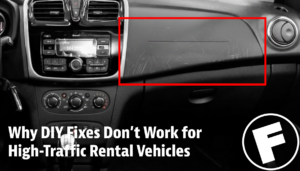
Why DIY Fixes Don’t Work for High-Traffic Rental Vehicles
The economics of managing a high-traffic vehicle fleet boil down to a single, relentless metric: utilization rate. Every hour a rental car, rideshare vehicle, or leased asset sits idle in a maintenance bay, it represents lost revenue. Compounding this challenge is the sheer velocity of physical deterioration. High-traffic rental vehicles experience an accelerated lifecycle of wear and tear that far outpaces privately owned automobiles. From deep scratches in rigid plastic door panels and gouged leather seat bolsters to unsightly cigarette burns on vinyl armrests, the interior of a rental asset is a constant battleground that demands professional fleet interior repair to stay profitable.
When faced with the daily reality of interior damage, fleet managers and independent rental operators frequently look for ways to cut costs and expedite turnaround times. This search for efficiency often leads down a dangerous path: handling DIY vehicle repair issues using over-the-counter patch kits, liquid vinyl compounds, and quick-fix retail solutions.
While the appeal of an instant, low-cost fix is understandable, attempting to resolve complex structural and aesthetic issues in-house regularly backfires. Relying on superficial patches fails to provide the deep resilience achieved through professional fleet interior repair services. Instead, it introduces a host of hidden operational hazards, financial liabilities, and long-term asset devaluation.
Ultimately, high-utilization assets require commercial-grade durability. Understanding why retail methods consistently fail under high-traffic conditions highlights the critical need for a more sustainable, commercially viable approach to fleet maintenance. Transitioning to a dedicated routine of automotive interior restoration ensures that your vehicles remain visually flawless, structurally sound, and constantly ready for the road.
The Illusion of the Low-Cost Quick Fix
The commercial marketplace is flooded with retail products marketed as comprehensive, easy-to-use remedies for automotive interior damage. These products promise that anyone can restore cracked leather, ripped vinyl, or scratched plastic in just a few steps. For an operation managing dozens or hundreds of vehicles, the prospect of resolving these issues for the cost of a retail kit is incredibly tempting. It seems to offer an immediate remedy to keep cars on the road without the perceived premium of external vendor services.
However, this calculation ignores the fundamental difference between amateur retail products and commercial-grade restoration processes. Retail kits are engineered for low-cost, low-risk, single-use consumer applications. They rely on universal, one-size-fits-all materials designed to provide a temporary cosmetic mask rather than a permanent, structural renewal.
When applied to a vehicle that will host dozens of different drivers and passengers over the course of a single month, these superficial treatments break down almost immediately. The initial financial savings disappear when a repair fails within days, requiring the vehicle to be pulled from service a second time to address the exact same point of damage.
The Technical Reality of Advanced Interior Materials
Modern automotive interiors are complex combinations of highly specialized polymers, treated leathers, and engineered composite materials. Each of these surfaces possesses distinct chemical properties, thermal expansion rates, and structural behaviors under physical stress. Effectively restoring these surfaces requires a deep understanding of material science, precise chemical matching, and specialized application techniques.
Leather Substrates and Chemical Balances
Automotive leather is vastly different from the leather used in apparel or home furnishings. It is treated with protective topcoats, specialized dyes, and UV inhibitors engineered to withstand extreme cabin temperature fluctuations and constant friction.
When a tear or puncture occurs, the structural integrity of the entire panel is compromised. Retail repair kits typically provide generic adhesive pastes that cure into hard, inflexible plugs. These rigid patches cannot bond naturally with the supple, fibrous network of real leather. As a passenger enters or exits the vehicle, the natural flexing of the seat exerts localized pressure on the boundary of the rigid repair, causing the surrounding leather to shear and tear further.
Vinyl and Polyurethane Elastomers
Vinyl and synthetic leather elements used on armrests, console lids, and seat backboards are prized for their non-porous resilience. However, once punctured or sliced, their polymeric chains begin to unwrap, causing the damage to rapidly expand under pressure.
Mending vinyl requires a thermal or chemical cross-linking process to fuse the repair material with the original substrate. DIY liquid vinyl products rarely achieve the necessary molecular bond. Instead, they sit as a superficial layer on top of the damage, highly susceptible to peeling when exposed to friction, cleaning chemicals, or passenger sweat.
Thermoplastic Composites and Textured Hard Plastics
Dashboards, door cards, and pillar trim pieces are typically molded from rigid or semi-rigid thermoplastics like acrylonitrile butadiene styrene (ABS) or polypropylene. These materials are engineered to absorb energy and resist impact, but they are notorious for showing scuffs, deep gouges, and stress discoloration.
Once the factory-molded grain texture is scratched away, it cannot be recovered by simply smearing a filler material into the void. Achieving an invisible, structurally sound repair requires chemical adhesion promoters, specialized plastic welding elements, and the manual re-creation of the surface micro-texture to ensure the repair matches the surrounding area.
The Hidden Operational Pitfalls of In-House Repairs
Beyond the technical limitations of retail materials, relying on in-house staff to perform complex interior restorations introduces a variety of operational inefficiencies that erode a fleet’s bottom line.
Labor Misallocation and Skill Deficits
Fleet maintenance personnel are typically trained in mechanical diagnostics, fluid management, brake servicing, and tire replacement. Expecting these technicians to suddenly perform high-level aesthetic restorations without extensive training is an inefficient use of resources.
The time a mechanic spends struggling to color-match a vinyl seat or sand a dashboard scratch is time stolen from critical mechanical preventative maintenance. This misallocation extends the time vehicles sit idle in the shop, compounding utilization losses.
Color-Matching Complexities Under Varied Lighting
One of the most visible indicators of an amateur repair is a mismatched color or sheen. Automotive interiors are subjected to extreme ultraviolet radiation, causing dyes to fade unevenly over time depending on the vehicle’s storage conditions and geographic location. A standard color code that matched a vehicle perfectly when it rolled off the assembly line will rarely match that same vehicle after two years of active service.
Professional restoration requires the manual blending of tints and color bases to account for UV degradation, sheen levels, and ambient lighting shifts. Amateur attempts usually result in obvious patches that draw the eye directly to the previously damaged area, signaling a poorly maintained asset to discerning customers.
The Problem of Premature Wear and Structural Failure
A superficial cosmetic patch does nothing to stop the underlying damage from worsening. A small slice in a seat bolster that is filled with consumer-grade glue will continue to expand underneath the patch as passengers sit down. Over time, the hidden tear widens until the synthetic backing completely unravels. What began as a minor, easily fixable slice turns into a massive structural failure that requires a complete panel replacement or a whole new seat assembly.
The Long-Term Impact on Asset Value and Branding
In the highly competitive vehicle rental and fleet leasing industries, the physical condition of an asset serves as a direct extension of the brand’s reputation. It also dictates the ultimate residual value of the asset when it is retired from service and sent to the secondary wholesale or retail market.
Brand Perception and Customer Retention
The modern consumer has exceptionally high expectations for cleanliness and vehicle condition. When a customer opens a rental car door and is greeted by cracked vinyl armrests, peeling leather patches, or scarred plastic dashboards, it immediately hurts their perception of the brand.
Substandard interiors imply that the operator cuts corners, leading customers to wonder if mechanical maintenance has been similarly neglected. In an era of instant online reviews and social media sharing, a single photo of a badly patched interior can quickly tarnish a company’s public profile.
Maximizing Residual Value at De-fleeting
Fleet vehicles are depreciating assets, and minimizing that depreciation is essential for maintaining strong profit margins. When it comes time to de-fleet and sell units at auction or to secondary buyers, interior condition plays a massive role in valuation.
Appraisers and wholesale buyers easily spot amateur patches and DIY vehicle repair issues, using them as leverage to demand steep discounts. Professional interior restoration ensures that vehicles command top dollar at auction, directly recovering the initial investment in high-quality maintenance.
The Professional Restoration Framework
Protecting high-traffic rental assets requires moving away from reactive, amateur fixes and adopting a systematic framework that illustrates why professional car interior repair is the smartest choice for fleet longevity. This approach combines specialized materials, advanced chemical engineering, and master craftsmanship to deliver durable, near-invisible repairs that withstand the relentless demands of commercial service.
Advanced Chemical Bonding and Cross-Linking
Unlike consumer kits that merely sit on top of a damaged surface, professional restoration techniques utilize advanced chemical bonding agents and cross-linking polymers. These specialized compounds penetrate the molecular structure of the damaged leather, vinyl, or plastic substrate, creating a cohesive chemical bridge that fuses the new material with the old. The result is a repaired area that mirrors the flexibility, tensile strength, and texture of the original factory surface.
Precision Texturing and Micro-Graining
The human eye is incredibly adept at identifying flat, untextured spots on an otherwise patterned surface. Professional technicians utilize advanced texturing mats, specialized graining papers, and custom spraying techniques to replicate the precise micro-pattern of the surrounding material. Whether dealing with a heavily grained truck dashboard or a smooth, fine-grain premium leather seat, this attention to detail ensures the repair blends seamlessly into its surroundings.
UV-Stable and High-Wear Finish Formulations
The final step in a professional restoration is the application of a specialized protective topcoat. These industrial-grade finishes are formulated to protect the repair from intense UV radiation, aggressive chemical cleaning agents, and constant physical friction. This ensures that the restored section remains vibrant, flexible, and fully integrated for the remainder of the vehicle’s service life.
Choosing a Sustainable Solution for Fleet Longevity
For fleet operators focused on maximizing efficiency, building a long-term relationship with a dedicated, professional interior restoration specialist is a critical competitive advantage. Instead of losing valuable time and money on failed in-house fixes, managers can rely on mobile, on-site professionals who understand the unique operational needs of commercial fleets.
By prioritizing professional fleet interior repair and partnering with upholstery repair experts who specialize in comprehensive vehicle wear solutions, fleet owners can dramatically reduce overall maintenance costs. This proactive strategy ensures that every vehicle in the fleet remains clean, presentable, and safely on the road, providing an optimal customer experience while protecting bottom-line margins.
To secure your fleet investments, eliminate operational downtime, and ensure your high-traffic assets consistently deliver a premium passenger experience, partner with trusted experts who specialize in commercial-grade automotive interior restoration. Our mobile service teams provide on-site, turn-key solutions tailored specifically to the rigorous demands of commercial fleet operations. Protect your bottom line and elevate your brand standards today by scheduling an on-site evaluation with our professional team.
Frequently Asked Questions
Q: Why do retail leather repair kits peel so quickly in rental cars?
A: Retail kits rely on universal air-dry adhesives that form a superficial layer rather than a true chemical bond. Under the constant friction and weight shifts common in rental vehicles, these rigid patches quickly separate from the flexible leather substrate, leading to peeling and further tearing.
Q: How long does a professional fleet interior repair take to cure before a car can return to service?
A: Professional restoration processes utilize specialized curing agents, cross-linkers, and specialized heating elements that accelerate drying times. Most interior repairs are fully cured and ready for active passenger service within hours of application, minimizing fleet downtime.
Q: Can deep gouges in hard plastic dashboards actually be repaired invisibly?
A: Yes. Professional technicians use specialized plastic welding compounds and advanced adhesion promoters to fill the void structurally. They then manually replicate the factory micro-grain texture and apply a color-matched, UV-stable topcoat to make the repair blend seamlessly with the rest of the dashboard.
Q: What are the primary financial drawbacks of relying on in-house staff for rental car restoration?
A: In-house staff generally lack the specialized training, precision color-matching tools, and commercial-grade compounds required for lasting results. This often leads to high repair failure rates, multi-stage vehicle downtime, cosmetic mismatches, and diminished asset value at auction.
Q: How do professional vehicle wear solutions help protect a fleet’s resale value at auction?
A: Professional restorations eliminate noticeable interior damage and prevent small tears or cracks from turning into major structural failures. Maintaining a clean, original-looking interior prevents auction appraisers and wholesale buyers from demanding steep reconditioning discounts.
Q: Is it possible to clean professionally restored interior surfaces with standard fleet disinfectants?
A: Yes. Professional interior restorations are sealed with industrial-grade, UV-stable protective topcoats. These commercial finishes are engineered to resist degradation from regular physical friction and the harsh chemical sanitizers used during standard fleet detailing cycles.