
Circular Economy Examples in Everyday Home Services
The modern household is at the center of a significant environmental shift. As the limitations of the traditional “take, make, dispose” model become more apparent, homeowners are looking for ways to align their living spaces with more responsible practices. One of the most effective ways to do this is by looking at circular economy examples within the realm of home maintenance. Instead of discarding items at the first sign of wear, we are seeing a resurgence of a robust repair culture that prioritizes longevity and quality. This movement toward a reuse economy is not only better for the planet but also more practical for maintaining the integrity of our home furnishings.
How Circular Economy Examples Work in Your Living Room
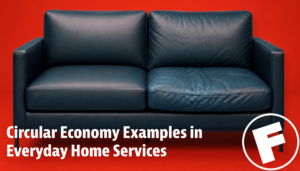
A circular economy is restorative by design. In a domestic setting, this means finding ways to keep furniture and fixtures in use for as long as possible. Many of the most impactful circular economy examples involve choosing local sustainability services that specialize in reviving existing assets. When a leather chair develops a tear or a sofa cushion begins to sag, the circular approach is to look for a restoration solution rather than a replacement.
By choosing upholstery restoration, homeowners can bypass the energy-intensive process of manufacturing and shipping new furniture. This keeps high-quality materials out of landfills and preserves the craftsmanship of original pieces. This shift in mindset is a cornerstone of sustainable home maintenance, where the goal is to steward our belongings through careful upkeep and professional intervention.
The Rise of Repair Culture and Local Expertise
The growth of a global repair culture is a direct response to the era of disposable goods. For years, “fast furniture” dominated the market, but consumers are increasingly realizing that these items often lack the structural integrity worth preserving. In contrast, well-made pieces are ideal candidates for furniture life extension.
Local sustainability services play a vital role in this ecosystem. These experts provide the specialized skills needed to perform intricate repairs on-site, reducing the carbon footprint associated with transporting heavy items to a central factory. Whether it is reinforcing a split seam or revitalizing the finish on a vinyl headboard, these services allow homeowners to participate in the reuse economy without sacrificing convenience or aesthetic appeal.
Benefits of Sustainable Home Maintenance
Adopting a strategy of sustainable home maintenance offers several advantages that go beyond environmental impact:
- Cost Efficiency: Professional restoration is typically much more affordable than purchasing a new, high-quality equivalent.
- Preservation of History: Many pieces of furniture have sentimental value or unique designs that cannot be replicated by modern mass-market alternatives.
- Waste Reduction: Every successful repair is a win for waste reduction services, as it prevents bulky items from entering the waste stream.
- Higher Quality: Older furniture often features superior materials, such as solid wood frames, that are well worth the investment of a repair.
Upholstery Restoration as a Functional Asset
In many cases, the damage that leads people to discard a piece of furniture is purely surface-level. This is where upholstery restoration proves its value. A professional technician can address specific issues like:
- Split Seam Repair: Reinforcing stitching that has pulled apart due to tension or age.
- Foam Replacement: Restoring the comfort and shape of sagging cushions.
- Mechanical Fixes: Repairing the internal mechanisms of recliners or sofa beds.
- Surface Revitalization: Cleaning and protecting leather, vinyl, and fabric to prevent future cracking or fading.
These interventions are primary circular economy examples because they address the failure points of a product without requiring the disposal of its functional parts. By focusing on these “light” repairs, homeowners ensure furniture life extension and maintain a high standard of interior comfort.
Supporting the Reuse Economy Through Better Choices
The reuse economy thrives when we prioritize quality over quantity. When shopping for new items, looking for pieces that are “designed for repair” is a great way to start. However, for the items we already own, the best path forward is to build a relationship with local sustainability services.
These providers often act as consultants for sustainable home maintenance, offering advice on how to care for different materials to avoid the need for major repairs down the line. This proactive approach is a key part of waste reduction services, as it stops the cycle of degradation before it becomes irreversible.
Practical Steps for a Circular Home
Transitioning to a more circular lifestyle doesn’t have to be complicated. You can start by implementing these practices:
- Audit Your Assets: Look at the furniture in your home that is showing signs of wear. Is the damage structural, or could it be fixed with a targeted repair?
- Choose Restoration First: Before heading to a furniture store, reach out to a specialist in upholstery restoration to see if your current piece can be saved.
- Invest in Maintenance: Use high-quality conditioners and cleaners to keep materials like leather and vinyl supple.
- Support Local: By hiring local sustainability services, you keep resources within your community and reduce the environmental costs of logistics.
Why Furniture Life Extension is the Future
The move toward furniture life extension is more than just a trend; it is a necessary evolution in how we manage our resources. As global supply chains become more complex and raw materials more expensive, the value of the items already in our homes increases. By embracing a repair culture, we are not just fixing furniture; we are building a more resilient and sustainable way of life.
Every time we choose to restore a piece of furniture, we are providing a real-world demonstration of circular economy examples. We are proving that the reuse economy is a viable and attractive alternative to the “throwaway” culture of the past. Through sustainable home maintenance and the support of waste reduction services, we can create homes that are as durable as they are beautiful.
If you have furniture that has seen better days, don’t rush to replace it. Professional restoration can bring back the beauty and functionality of your favorite pieces while supporting a more sustainable future. By choosing to repair instead of replace, you are making a direct contribution to the environment and your own home’s value. Contact a local expert today to learn more about how light upholstery services can revitalize your living space.
Frequently Asked Questions
Q: What are some common circular economy examples for the home?
A: The most frequent examples include choosing upholstery restoration for worn furniture, using local sustainability services to fix appliances, and participating in the reuse economy by purchasing second-hand or refurbished goods. These actions keep materials in use longer and reduce the need for new production.
Q: How does a repair culture impact my household budget?
A: Engaging in a repair culture is often significantly cheaper than the alternative of buying new. By investing in furniture life extension through minor repairs and maintenance, you can avoid the high costs of replacing entire sets of furniture, allowing you to spend your budget on other home improvements.
Q: Why are local sustainability services better than large-scale recycling?
A: Local sustainability services focus on keeping an item’s original form and value, which requires less energy than recycling it into raw materials. This approach is a core part of waste reduction services, as it prevents the item from entering the waste cycle entirely and supports the local economy.
Q: What items are best suited for upholstery restoration?
A: Items with high-quality frames or sentimental value are the best candidates. This includes leather sofas with surface wear, dining chairs with split seams, or recliners with broken mechanisms. Professional restoration ensures these items continue to provide service, embodying the principles of sustainable home maintenance.
Q: How can I contribute to the reuse economy?
A: You can contribute by maintaining your current belongings to ensure their longevity, choosing to repair items when they break, and supporting businesses that offer waste reduction services. By focusing on furniture life extension, you help create a market that values quality and sustainability over disposability.