
Professional Hail Damage Repair for Vinyl Siding and Window Casings
When a severe weather front sweeps through a residential neighborhood or a commercial district, the immediate focus is almost always on the roof. Homeowners and property managers instinctively look upward to check for missing shingles or punctured underlayment. While roof integrity is undeniably vital, a property’s vertical surfaces often bear the brunt of horizontal, wind-driven impacts.
When frozen precipitation chunks hit at high velocities, standard exterior cladding takes a severe beating. The resulting damage can quickly compromise a building’s aesthetic value, market appeal, and structural defense networks.
For decades, the standard response to significant exterior impact damage has been complete material replacement. If a hail storm left a wall looking like a golf course, traditional contractors would argue that the only solution was to strip away all the panels and start from scratch. However, modern breakthroughs in polymer chemistry and mobile restoration techniques have completely changed the game.
Opting for professional hail damage siding repair instead of a full tear-down offers a faster, more affordable, and incredibly efficient alternative. By choosing focused restoration over total demolition, property owners can fix targeted issues without throwing away thousands of square feet of perfectly functional material.
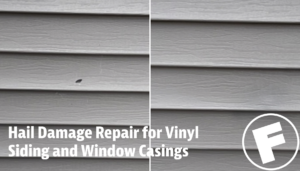
The True Anatomy of Storm Damage on Vinyl and PVC
To appreciate why a targeted repair makes sense, it is important to understand exactly what happens to polyvinyl chloride (PVC) and vinyl building materials during a severe weather event. Siding and window casings are engineered to withstand typical environmental stressors like rain, snow, heat waves, and moderate wind. However, solid frozen stones present a completely different mechanical challenge.
Depending on the size of the frozen stones and the ambient outdoor temperature, impact damage generally manifests in three distinct ways:
- Punctures and Blowout Holes: In colder temperatures, vinyl siding loses some of its natural elasticity and becomes brittle. When high-velocity impacts hit this hardened surface, they can punch entirely through the panel, leaving jagged, open holes.
- Star Cracks and Hairline Fractures: Sometimes an impact doesn’t break all the way through immediately. Instead, it creates a radiating web of microscopic fractures known as a star crack. Over time, as the building expands and contracts with daily temperature changes, these small fractures widen into visible splits.
- Chipped Edges and Profile Cracks: The interlocking seams where siding panels connect and the tight contours around window casings are highly susceptible to chipping. When wind-driven ice catches these exposed edges, it can snap off critical anchoring pieces.
Leaving these entry points exposed is a major gamble. Even a tiny opening allows wind-driven rain to bypass your home’s exterior cladding, creating hidden moisture reservoirs that can rot the underlying wood framing long before you notice any signs of trouble from the inside.
Why Full Exterior Replacement Is Often an Overreaction
When insurance adjusters or general handymen survey a storm-damaged property, their default recommendation is frequently a total replacement. While this approach certainly solves the problem, it introduces a massive amount of unnecessary stress, waste, and financial overhead.
1. The Nightmare of the Color Mismatch
The biggest challenge with replacing only a few panels of old siding is the unavoidable reality of sun fading. The ultraviolet (UV) rays from the sun gradually alter the pigment of vinyl siding over time. If your siding has been on your home for five, ten, or fifteen years, its current shade is vastly different from a brand-new panel straight from the factory.
If a contractor pulls off three damaged panels and replaces them with factory-new stock, your home will end up with highly visible, mismatched stripes that instantly ruin its curb appeal. To avoid this, contractors often insist on replacing the entire wall or even the whole house, turning a minor repair issue into a massive, multi-day construction project.
2. Extreme Construction Disruption
A full siding replacement transforms your private residence or commercial property into an active, chaotic construction site. Teams of workers must set up scaffolding, drop large waste dumpsters into your driveway, and spend days tearing down old materials. The constant noise of hammering, scraping, and pneumatic nail guns makes working from home, running a business, or simply relaxing completely impossible.
3. Excessive Landfill Waste
From an environmental perspective, tearing down an entire exterior because of isolated storm damage is incredibly wasteful. Thousands of pounds of non-biodegradable PVC plastic end up hauled away to local landfills. Embracing localized storm damage restoration keeps functional materials on the structure and actively minimizes your property’s environmental footprint, making it a highly sustainable choice.
The Scientific Precision of Professional Siding Restoration
Modern vinyl siding restoration services do not rely on temporary patches or ugly cosmetic cover-ups. Instead, they use advanced material science to replicate the original manufacturing process right on the side of your building. This specialized process requires a delicate balance of structural craftsmanship and chemical engineering to ensure the final repair functions as a seamless extension of the original wall.
The Core Restoration Process
- Cleaning and Stabilization
- Remove oxidized layers, dirt, and loose material.
- Secure the back of the fracture to prevent shifting.
- Molecular Bonding
- Inject specialized fillers that merge with PVC polymers.
- Re-establish structural continuity across the break.
- Texture Duplication
- Replicate natural wood-grain patterns while uncured.
- Sand flush to ensure completely flat transitions.
- UV-Stabilized Color Matching
- Sample the current faded shade of surrounding panels.
- Spray custom coatings that chemically lock onto vinyl.
Because vinyl constantly expands in the summer heat and contracts in the winter cold, the compounds used by specialists are engineered to remain flexible. A rigid filler like auto-body compound or standard household caulk will quickly crack and fall out when the seasons change. Professional-grade repair materials move in perfect harmony with your walls, creating a permanent, weather-tight shield.
The Strategic Value of Repairing Window Casings
When severe storms hit, window trims and casings are just as vulnerable as your main walls, yet they are routinely overlooked. PVC window casings serve as critical transition barriers, keeping moisture away from the delicate joints where your windows meet the wall framing.
A small crack or chip in a window casing might look like a purely cosmetic issue, but it acts as a direct pathway for water intrusion. During heavy, wind-driven downpours, water tracks along the edge of the casing and slips deep inside the wall cavity. Because there is virtually no airflow inside a finished wall, that trapped moisture cannot evaporate. Over months and years, it creates a silent breeding ground for wood-rotting fungi and structural black mold.
Attempting to replace a single damaged window frame or casing is an invasive, expensive process that often requires disturbing the window flashing, interior drywall, and surrounding siding. Utilizing professional siding repair methods to restore the existing casing in place completely bypasses this structural risk. Technicians fill the fractures, smooth out the contours, and seal the surface with a durable, UV-resistant coating, restoring full protective capabilities without risking the structural integrity of your window seals.
Financial Advantages for Homeowners and Property Managers
Choosing localized hail damage siding repair over complete structural replacement provides massive financial relief for property owners, asset managers, and insurance policyholders alike.
Preserving Insurance Claims and Lowering Deductibles
When widespread storm damage hits a region, insurance companies are flooded with thousands of high-cost replacement claims. For a property owner, filing a massive claim for a full exterior replacement can lead to skyrocketing policy deductibles or even future coverage cancellations.
Because specialized restoration costs a small fraction of a full tear-down, many property owners find they can handle the repairs entirely out of pocket, saving their insurance claims for catastrophic emergencies. If a claim is filed, adjusters are often thrilled to approve restoration options because it significantly minimizes the payout burden on the policy.
Protecting Commercial Cash Flow
For commercial real estate investors, HOA board members, and apartment complex managers, widespread exterior damage can cause immediate operational paralysis. If an entire leasing office or multi-family building is marred by storm impacts, the sudden drop in curb appeal can hurt tenant retention and drive down property values.
Approving a full replacement across multiple buildings can completely deplete a capital improvement budget, leaving no funds for interior upgrades, HVAC maintenance, or parking lot paving. Incorporating targeted vinyl siding restoration services into your property maintenance solutions keeps your real estate assets looking pristine while preserving critical working capital.
What to Look for in a True Restoration Expert
Because working with vinyl polymer chemistry requires specialized training, specialized tools, and artistic precision, this work should never be left to a standard general handyman or a DIY attempt. To ensure your exterior looks flawless and stands up to the elements for decades, look for a service provider that meets these strict criteria:
- On-Site Color Customization: True specialists never rely on pre-mixed factory colors. They should possess the technology and training to manually blend and match pigments on-site, perfectly mirroring the exact level of UV fading on your building.
- Proprietary Flexible Compounds: Verify that the team utilizes repair compounds explicitly engineered to bond with PVC plastic and maintain flexibility through extreme hot and cold cycles.
- Comprehensive Exterior Capabilities: Your chosen team should be equally skilled at handling both horizontal siding panels and intricate architectural details like window casings, soffit tracks, and corner trim pieces.
- Proven Commercial Experience: A reliable repair company should have a strong track record of working seamlessly alongside insurance providers, corporate property managers, and independent homeowners alike.
By verifying these professional qualifications, you protect your real estate asset from short-lived, amateur patches and guarantee a weather-resistant finish that preserves your home’s value for years to come.
Don’t let unexpected storm damage force you into a stressful, expensive, and completely unnecessary exterior construction project. Whether your property has suffered from minor hail chips, major puncture holes, or cracked window casings, advanced restoration offers a fast, affordable, and visually flawless way forward.
Reach out to Fibrenew today to schedule a detailed visual estimate with a local specialist. Our highly trained, fully licensed technicians are ready to restore your vinyl siding and PVC trim back to its original condition, providing top-tier storm recovery solutions without the high costs, heavy waste, and long delays of full replacement.
Frequently Asked Questions
Q: How can I be absolutely certain the repaired spots won’t stand out against my older, faded siding?
A: This is exactly why professional restoration is superior to panel replacement. Rather than using standard factory colors that would contrast sharply with weathered walls, expert technicians analyze the current UV fade of your exterior and custom-blend pigments on-site to ensure the repair area blends into its surroundings.
Q: Can professional repairs withstand high-velocity wind and freezing winter temperatures?
A: Yes, they can. The advanced polymer compounds used by specialized technicians are specifically formulated to create a durable chemical bond with the original PVC plastic. These compounds retain their elasticity when dry, allowing them to expand and contract smoothly along with your walls during extreme temperature shifts without cracking or breaking loose.
Q: Is it possible to fix a vinyl window casing that has split completely in half from a storm impact?
A: In most cases, yes. By applying high-strength structural mesh behind the fracture and filling the split with a specialized PVC-bonding compound, technicians can completely restore the frame’s structural strength. The area is then sanded smooth and recoated, saving you from the high costs and logistical headaches of a full window frame replacement.
Q: How long does a typical storm damage repair project take to complete?
A: Unlike a full replacement project that can easily drag on for days or weeks, the vast majority of localized repairs are completed in just a few hours. A mobile technician can complete the work quickly, allowing you to avoid noisy construction crews, heavy equipment, and major disruptions to your daily routine.