How Circular Restoration is Saving the Next Generation’s Vintage Leather
In an era defined by “fast furniture” and the relentless cycle of disposable decor, a quiet but powerful rebellion is taking root in the world of interior design and sustainable living. It is called Circular Restoration. For decades, the standard consumer response to a faded, cracked, or stained leather heirloom was replacement. If the sofa looked tired, it was hauled to the curb, and a new one often constructed with lower-quality materials, “bonded” scraps, and synthetic fillers took its place in a never-ending loop of waste.
But today’s collectors, eco-conscious homeowners, and design enthusiasts are shifting their perspective. They are realizing that vintage leather isn’t just “old furniture”; it is a finite asset that carries a history, a soul, and a physical quality that modern manufacturing often fails to replicate. High-quality top-grain leather is essentially a biological archive; it records the life of the piece through a unique patina that cannot be faked. However, maintaining that legacy requires more than a casual dusting. This is where a professional leather conditioning service becomes the bridge between a piece of furniture that is “falling apart” and one that is “aging gracefully.”
By prioritizing restoration over replacement, we aren’t just saving money though the cost-benefit analysis is undeniably in favor of the consumer. We are actively saving the next generation’s vintage leather from becoming environmental waste. Every time a homeowner chooses a leather conditioning service instead of a trip to the landfill, they are ensuring that the heirlooms of tomorrow survive the neglect of today.
What is Circular Restoration?
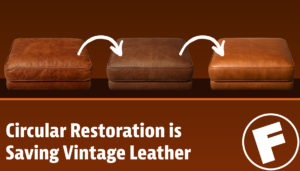
The circular economy is a model of production and consumption that involves sharing, leasing, reusing, repairing, refurbishing, and recycling existing materials and products for as long as possible. When applied to high-end upholstery, this means moving away from the “linear” model where we take resources, make a product, and eventually throw it away and moving toward a circular one.
Leather is one of the few materials on earth that actually gains character and “patina” with age, provided it receives the proper care. However, without a professional leather cleaning, conditioning & protecting service, that prized patina can quickly turn into irreversible structural damage. Circular restoration is the art of intervening at the right moment to reset the clock on wear and tear.
The Environmental Cost of the “New”
To understand why restoration is so vital, we must look at the impact of replacement. The production of a single new leather sofa involves significant water usage, chemical tanning processes, and the carbon footprint of global shipping. When a high-quality leather piece is discarded, we aren’t just losing the hide; we are losing the hardwood frames, the steel springs, and the craftsmanship that went into its original construction.
Most “modern” budget furniture is not designed to be repaired. It is designed to be replaced. By choosing to invest in a professional leather protecting service, you are effectively opting out of this wasteful cycle. You are choosing to maintain a piece of history that was built to last a lifetime, rather than a season.
The Three Pillars of Leather Longevity
To ensure a piece of leather furniture survives long enough to be passed down to the next generation, it requires a specialized, three-step approach that goes far beyond a simple wipe-down with a damp cloth.
1. Professional Leather Cleaning: Removing the “Abrasive”
Many homeowners don’t realize that the primary enemy of leather isn’t necessarily age; it’s friction. Daily use accumulates microscopic particles of dust, body oils, and environmental pollutants. These particles act like sandpaper on the leather’s fibers every time someone sits down.
Standard household cleaners often have the wrong pH balance, which can strip away the leather’s protective finish. Professional Leather Cleaning utilizes specialized, pH-neutral formulas that lift deeply embedded dirt and oils without compromising the integrity of the hide. This step is essential to prepare the surface for the “medicine” of the restoration process: conditioning.
2. Deep Leather Conditioning: The “Fountain of Youth”
Leather is a natural material that contains essential oils. Over time, heat, sunlight, and low humidity cause these oils to evaporate. When leather loses its moisture, the fibers become stiff and brittle. This is when you start to see “spider-web” cracking on the seat cushions or headrests.
Leather Conditioning is the process of reintroducing these vital lubricants back into the dermis of the hide. A professional-grade conditioner penetrates the pores, restoring the “hand” (the softness and flexibility) of the material. This doesn’t just make the furniture more comfortable; it restores the leather’s ability to stretch and flex under pressure, preventing the deep fissures that eventually lead to catastrophic tears.
3. The Leather Protecting Service: Your Final Defense
The final step in the circular restoration model is the application of a breathable barrier. A professional Leather Protecting Service applies a specialized finishing coat that repels liquids, blocks harmful UV rays, and prevents dyes (like those from blue jeans) from transferring onto the leather. This “shield” ensures that future cleanings are more effective and that the leather remains in a “restorable” state for decades.
Is Your Furniture “Too Far Gone”? A Professional Diagnostic
Deciding whether to invest in restoration or replace a piece entirely depends on the current state of the hide. If you are unsure if your leather has reached the point of no return, use this quick diagnostic guide to evaluate its potential for circular restoration:
- Surface Scuffing & Scratches: Highly Restorable. Minor abrasions from pets, jewelry, or moving are usually contained within the topcoat. Professional color-matching and refinishing can make these disappear entirely.
- Fading & Sun Damage: Highly Restorable. If your leather has lost its luster due to UV exposure, it is often just a matter of the pigments breaking down. Specialized re-dying processes can restore the original vibrant hue.
- Minor Cracking: Restorable. When leather feels like parchment paper and shows fine “spider-web” lines, it is starving for moisture. Deep Leather Conditioning can stabilize these areas, while specialized flexible fillers can smooth the surface before it turns into a full tear.
- Complete Tears or Peeling: Evaluate Carefully. If the material is “peeling” or flaking off in sheets like a sunburn, it may be “bonded leather” (a synthetic composite), which generally cannot be restored. However, if genuine top-grain leather has a clean puncture or tear, a technician can often perform a sub-patch repair to restore its structural integrity.
The Legacy of Quality
There is a reason why “vintage” is a selling point in luxury markets. Older leather pieces were often sourced from higher-quality hides and tanned using slower, more robust methods. When you see a 40-year-old Chesterfield sofa that still looks magnificent, it isn’t a miracle; it’s the result of a consistent Leather Cleaning, Conditioning & Protecting Service schedule.
By embracing circular restoration, you are becoming a steward of quality. You are ensuring that the craftsmanship of the past remains a functional part of the future.
Preserve Your History Today
The furniture we sit on tells the story of our lives. Don’t let your vintage leather become a thing of the past. Whether it’s a mid-century modern masterpiece or a sentimental family heirloom, the right care makes all the difference in the world.
Would you like to see how your leather can be transformed? Schedule your professional Leather Cleaning, Conditioning & Protecting Service today and join the movement toward a more sustainable, beautiful home. We can provide a free estimate and help you determine the best path for your leather’s longevity.
Frequently Asked Questions
Q: Is it cheaper to restore leather or buy new?
A: In almost all cases, professional restoration and Leather Cleaning cost a fraction of the price of a new, high-quality leather piece. Additionally, restoration avoids the “hidden costs” of disposing of old furniture and the environmental impact of new production.
Q: Can I use olive oil or hair conditioner on my leather?
A: No. While these might provide a temporary shine, they contain fats and chemicals that can go rancid or rot the stitching of your furniture over time. Always use a professional Leather Conditioning product designed for upholstery.
Q: How do I prevent my leather from cracking in the first place?
A: The best prevention is a combination of keeping the piece out of direct sunlight and scheduling a professional Leather Protecting Service every 6 to 12 months. Regular maintenance keeps the fibers supple and resilient.
Q: What is the difference between “cleaning” and “conditioning”?
A: Leather Cleaning removes surface dirt and oils that cause abrasion. Conditioning replenishes the internal moisture of the hide to prevent brittleness. You should never condition “dirty” leather, as you may trap contaminants inside the pores.