
Fibrenew Tag
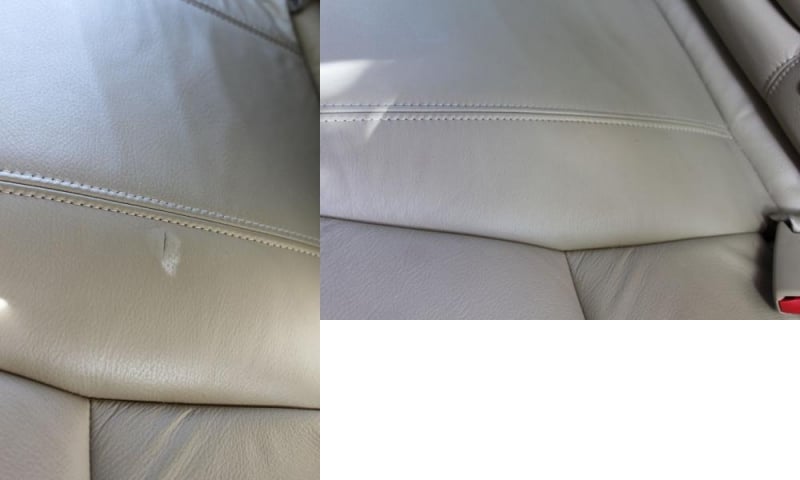
Most car interior leather and motorcycle seats are fully finished, and there are a couple of reasons why it cracks. Cracking usually occurs when the protective coating on fully finished leather is worn down or when there has been a manufacturer problem.

Cracked leather car seat
1. Body oil and dirt can cause leather to crack -
It is very easy for dirt and oils to collect on the surface of leather. Together, these act like a fine sand paper, breaking down the protective layer on fully finished leather over time, eventually leading to visible cracks at the surface. Once the protective layer is broken down, the leather underneath, which is incredibly porous, soaks up the dirt and oil sitting on its surface causing further abrasion and damage.
2. A manufacturer problem can cause leather to crack -
Tanneries put a layer of dye and a protective top coating on cow hide (almost like paint on drywall) to make fully finished leather. Leather has a lot of give and will stretch and move as people sit and slide around on it, so the manufacturer needs to stretch it properly before they put on the dye and protective top coating. If they don’t stretch it well, the leather will quickly stretch more than the dye can handle, and the coating will crack.
Once leather is cracked, a leather repair professional can typically fix it, however, it is much cheaper and easier to clean and take care of your leather seats from the start than to deal with cracking after it happens.
Additional Questions?
We’d be happy to answer any additional questions you have. Please post questions in the comments below, and, if you want to show us a photo of a specific piece of leather, either post it on our Facebook page or contact your local franchisee.
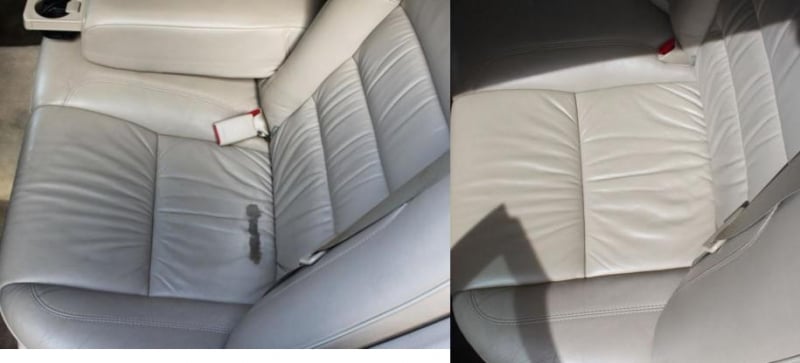
Could this nasty residue on fabric be removed ?
No need to buy a new sofa !
After renewing the seat cushions, this sofa life is extended by a few more years…
The business of dying leather is a tricky one, and you really can’t replicate it with any marker. People come to us all the time asking us to fix problems they’ve created trying to fix a bleached out or discolored spot on their upholstery with a similarly colored marker. The fact of the matter is that dyed leather usually has many layers and tones, and thinking you can find one marker that’s going to give you an exact match is like thinking a bottle of cheap hair dye is going to give your hair a natural look.

An example of a spot filled in with a brown marker
Now, if you just have a teeny tiny spot somewhere pretty hidden on your couch, car seat, etc. you might find marker results to be sufficient. But, if you want a discolored spot to match the rest of the piece, you really shouldn’t go the marker route. A professional, like Fibrenew, can usually re-dye spots for a very reasonable price.
There are a number of other home remedies and wives’ tales about using home products on leather. We do not advise using any of the following:
Questions or experiences with markers on leather? Post them in the comments!
This door panel was ready for a little renewal
Various spills resulted in a dirty and faded car seat on this Acura.
The leather needed to be cleaned and re-dyed…
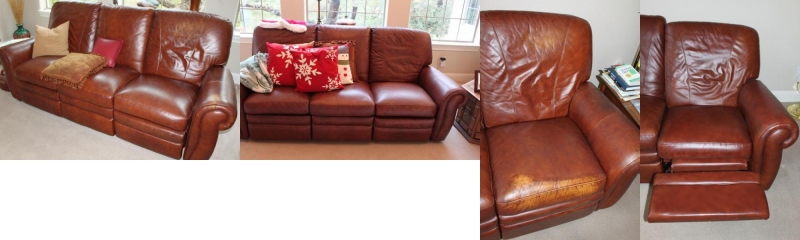
Was this 15+ years old leather furniture set going to be dumped ?
Nope !
All it needed was restoration to be back where it belonged… in its owners living room.
A tear that could be stopped before it spread !
This is on a vinyl panel.
The challenge with those leather cushions – loved by kitties – was to recreate the “sauvage” color to mimick the other cushions that didn’t get scratched by the cats…
“Sauvage” is a mix of color shades that some leather shows.
Vinyl is an incredibly durable material, and it holds up well to water exposure. Because of its durability, the vast majority of cushioned boat seats are made of vinyl. While vinyl is designed to hold up well to wear and tear, it does have its limits. Time itself can take a major toll on vinyl if you don’t care for it properly. It is important to clean your vinyl well on a regular basis, not just with water, but with a vinyl cleaner.

Keep your boat seats squeaky clean!
What to use
- Cleaner: All marine stores sell commercially made vinyl cleaners. We recommend using one of them on your vinyl seats. Many people attempt to use other household cleaners they think will save them a little cash, but, cleaners designed specifically for vinyl are better for your seats. For example, many people try using bleach, but it is too harsh for vinyl and will cause it to break down over time, becoming more easily damaged by every day wear and tear. With bleach, you also run the risk of bleaching any fabrics nearby or carpeting on your boat.
- Water: Use clean, fresh water to clean your seats. Distilled water is best because it lacks impurities that will stick around on your seats after you finish cleaning. If distilled water is not available, be sure to at least use tap water over lake, river or salt water. The dirt and minerals found in bodies of water will, like the small particles of dirt on your seats before you clean them, wear down your seats like fine sandpaper. While it might get any visible dirt off your seats, it will damage them in the long run.
How to clean marine vinyl seats
You should always read the directions on your vinyl cleaner, but, generally speaking, the steps to clean vinyl seats are as follows:
1. Use clean water on a damp rag to wipe any visible dirt or mess off your vinyl seats.
2. Put a little vinyl cleaner on a clean, damp cotton rag.
3. Gently wipe all vinyl surfaces in your boat. Be sure to cover all areas, especially those that are used regularly and wipe away any excess cleaner.
How often to clean your vinyl seats
It is a good idea to wipe down your vinyl seats between uses. It doesn’t take long at all and will help them last longer. Also, be sure to address any spills or messes immediately, as vinyl does stain. Take particular notice of tree sap and mildew:
- Remove tree sap immediately. Sap from overhanging trees can sink into your seats, even through tiny holes in boat covers. The heat from the sun can melt the sap into the vinyl. So, when taking your boat out, check for sap spills and wipe them up quickly with a citrus-based cleaner. If you need something stronger, try methyl hydrate, and always be sure to test all products in an inconspicuous place before using in an eye-catching place.
- If you have mildew, don’t just let it sit on your seats. Before long, it will start to smell bad and will break down your vinyl seats. To get rid of mildew, use a mold killer and cleaner – you can buy them at any gardening store.
If you have had particularly good luck with a vinyl cleaner or have any good tips, share them with other readers in the comments!