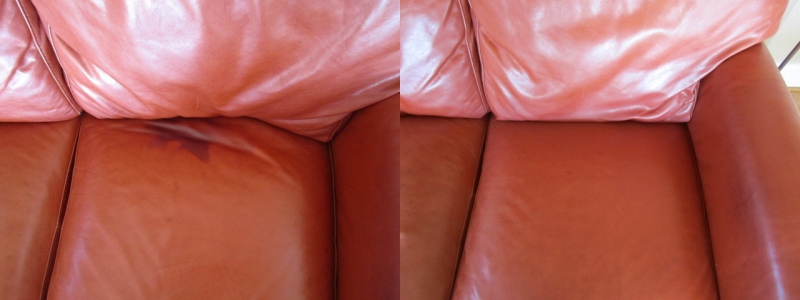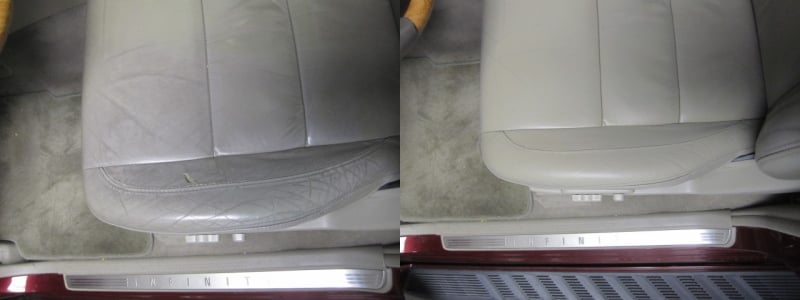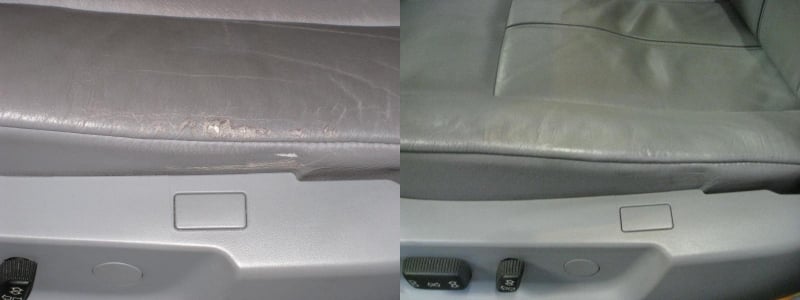

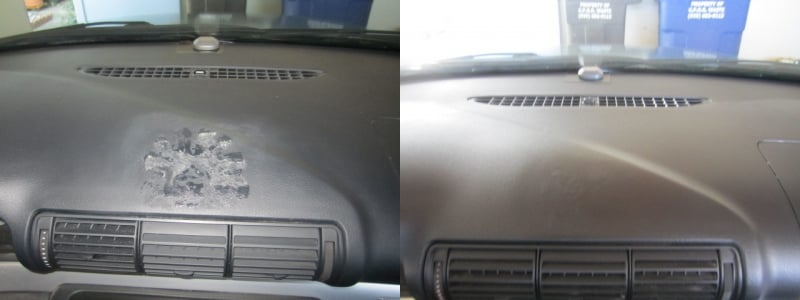
It’s true that finger nail polish will remove marks on leather upholstery, but it also removes the dyes that are supposed to be on the leather, leaving a bleached out spot on your leather’s surface. Finger nail polish also wears down the top coat on fully-finished leathers, leaving them more susceptible to damage.

Fingernail polish remover took the color out of this couch when the owner tried to use it to remove the pen mark.
There are a number of other home remedies and wives’ tales about using home products on leather including. We discourage the use of:
Questions or experiences with nail polish remover? Post them in the comments!
Leather furniture and upholstery will inevitably face some wear and tear throughout its life, and there are many types of damage you can’t avoid. However, sun damage is one problem that can definitely be prevented. Too much sunlight and heat will fade and/or dry out your leather.

Couch faded by the sun
Faded Leather
Fading is commonly seen in semi-aniline and aniline leathers, and it is less common in fully-finished leathers that have a protective topcoat. It’s a problem people frequently face, and, if you put your leather furniture next to a window that gets a lot of sunlight, you can see fading in as little as 4 to 6 months.
Dried Leather
Drying will occur with any type of leather. The sun’s heat slowly causes the moisture and natural oil in leather to evaporate. Over time, if you don’t care for your leather properly, it will dry out and crack.

Badly cracked chair
How to Prevent Sun Damage
One crucial step to preventing fading and cracking is to, if possible, keep your leather furniture out of direct sunlight. You can do all the right things to protect your sofa, but, if it’s directly in front of a sunny window, it is only a matter of time before the heat takes its toll. If you do need to place furniture in front of a window (we know, most people do), invest in some blinds to shade your furniture from the sun during the hottest, sunniest parts of the day. Those blinds will be a lot cheaper than taking your leather upholstery to a professional for patching and re-dying later on down the road.
Another important precaution to take is to clean and protect your furniture 3-4 times a year with a leather conditioning kit. For tips, check out our post on how to clean and protect your leather.
On a final note, do not try to treat your leather with olive oil or any other type of oil—it will end up causing major damage in the long run.
Questions? Comments? We’d love to hear from you!
A common place to find wear in a car is the left side of the drivers seat. The constant getting in and out of the car can cause the leather to crack or tear. Fibrenew technicians can effectively repair and re-dye the area to prevent further damage to your car seat and look like new again! Below is a before and after of a tear in a car seat located in San Francisco, CA.
With dry, dirty or scratched leather, you may find yourself scouring the internet for DIY treatments. Many articles cite olive oil as a cure-all for every leather ailment, from scratches to dryness to odors. It is likely that this myth came from the age old practice of oiling baseball gloves and horse saddles. Oil may have its perks in functionality for those purposes, but we strongly discourage using any type of oil on your fine leathers.
read more…
Unfortunately, sun and leather don’t usually mix well. Too much sunlight will do one of two things (and possibly both) to leather furniture and other upholstery– fading and drying.

Sun-damaged, faded leather chair
Fading is commonly seen in semi-aniline and aniline leathers, but is a little rarer in fully-finished leathers that have a protective top coat. It’s one of the most common problems we see, and if you put leather furniture next to a window that gets some serious sunlight, you can start to see fading in as little as 4 to 6 months.
Drying, on the other hand, is something the sun will do to almost any kind of leather – fully-finished or not. The heat of sunlight causes the moisture in the leather’s natural oils to slowly evaporate, and eventually, it will dry, stiffen and crack.
read more…